Author: preetweb1122

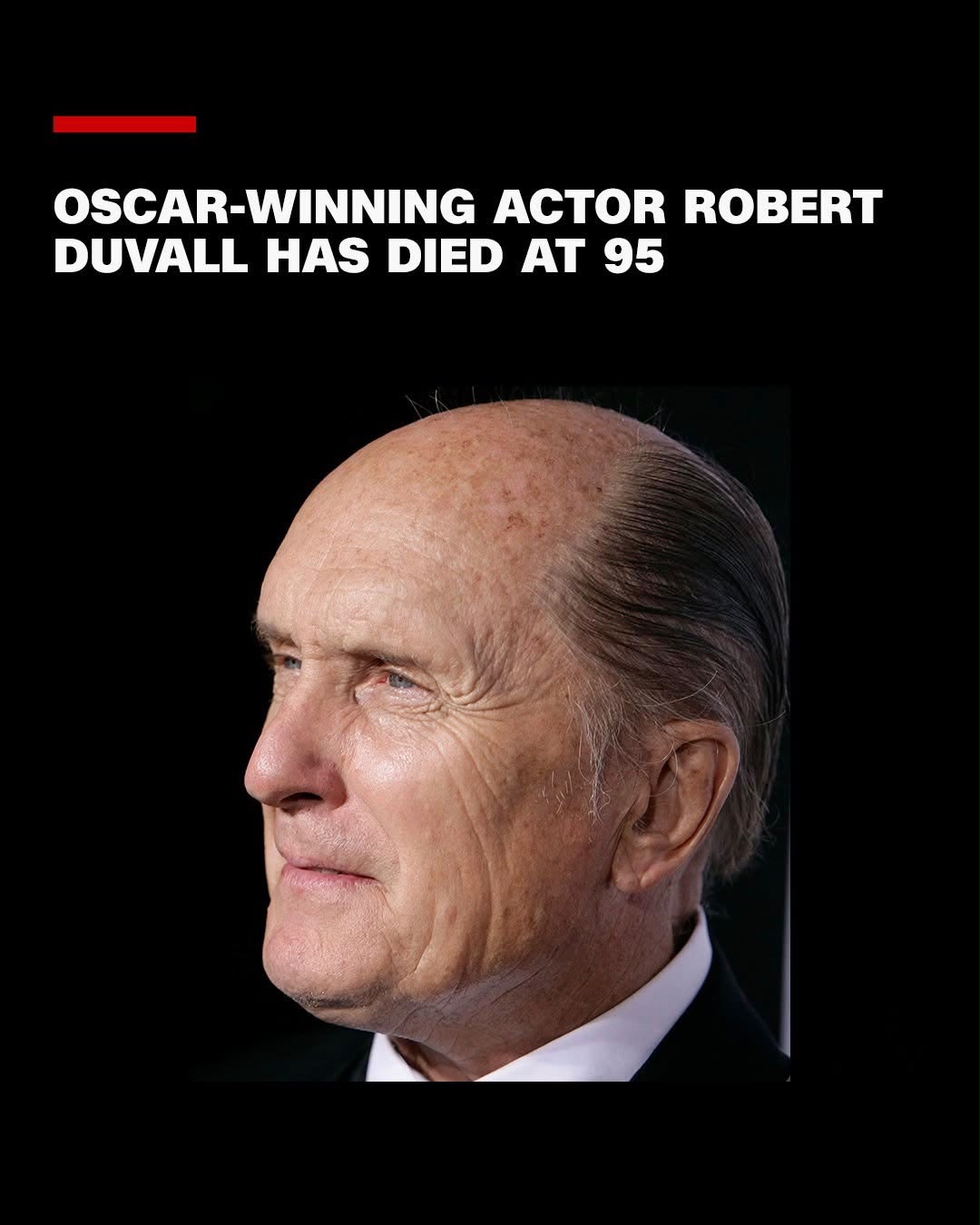
  • Oscar-winning actor Robert Duvall, best known for roles in “The Godfather” and “Apocalypse Now,” has died at 95.

    Oscar-winning actor Robert Duvall, best known for roles in “The Godfather” and “Apocalypse Now,” has died at 95.

    Robert Duvall: Remembering an Oscar-Winning Giant of American Cinema

    Robert Duvall, one of the most respected and enduring actors in American cinema, has died at the age of 95. Over a career spanning more than six decades, Duvall built a reputation for extraordinary versatility, understated intensity, and an ability to give even supporting characters remarkable emotional depth. From his unforgettable portrayal of Tom Hagen in The Godfather to his haunting performance as Lieutenant Colonel Bill Kilgore in Apocalypse Now, Duvall became a defining presence in generations of American filmmaking.

    His death marks the passing of an actor whose career was far larger than any single role. Duvall worked across crime dramas, westerns, war films, courtroom stories, family dramas, television productions, and independent cinema. He earned an Academy Award for his performance in Tender Mercies and received multiple additional Oscar nominations throughout his career. Yet awards and famous characters tell only part of the story. Duvall’s greatest achievement was perhaps his ability to make audiences believe that the people he portrayed existed before the camera arrived and would continue to exist after the scene ended.

    Born in San Diego, California, in 1931, Duvall developed an interest in acting at a time when American cinema was undergoing major changes. He studied at Principia College and later trained at the Neighborhood Playhouse School of the Theatre in New York, where he studied under influential acting teacher Sanford Meisner. That training helped shape an approach centered on natural behavior, emotional truth, and careful observation.

    Duvall’s early career was rooted in theater and television. Like many actors of his generation, he gradually built his reputation through smaller roles before becoming a major film star. His screen career began with appearances in the late 1950s, and one of his early breakthrough performances came in the 1962 classic To Kill a Mockingbird. As Arthur “Boo” Radley, Duvall had relatively little dialogue, yet his performance became one of the film’s most memorable elements. The role demonstrated something that would become a defining characteristic of his career: he understood that acting did not always require speaking.

    Duvall could communicate enormous amounts through posture, expression, silence, and small gestures. This quality made him particularly effective in roles involving emotionally restrained or complicated men. Rather than announcing what a character was feeling, he often allowed audiences to discover those feelings gradually.

    His career changed dramatically when he appeared in Francis Ford Coppola’s The Godfather in 1972. The film, adapted from Mario Puzo’s novel, became one of the most influential works in American cinema. Duvall played Tom Hagen, the adopted son of Don Vito Corleone and the family’s trusted lawyer and consigliere.

    Tom Hagen was not a conventional action character. His power came from intelligence, loyalty, diplomacy, and his understanding of the Corleone family’s internal world. Duvall approached the character with restraint. While Marlon Brando’s Don Corleone and Al Pacino’s Michael Corleone commanded enormous attention, Duvall’s Hagen served as a stabilizing presence within the family.

    The performance earned Duvall an Academy Award nomination for Best Supporting Actor. More importantly, it established him as one of the leading character actors of his generation. Tom Hagen became inseparable from the mythology of The Godfather, and Duvall returned to the role in The Godfather Part II in 1974.

    The success of The Godfather did not lead Duvall to pursue only glamorous leading roles. Instead, he continued to build a career around complex characters. His filmography became notable for its variety. He could play lawyers, soldiers, criminals, fathers, preachers, ranchers, police officers, and deeply troubled men without allowing one performance to simply repeat another.

    His collaboration with Francis Ford Coppola continued with Apocalypse Now, released in 1979. The film, inspired partly by Joseph Conrad’s Heart of Darkness, portrayed the Vietnam War through a surreal and psychologically disturbing journey. Duvall played Lieutenant Colonel Bill Kilgore, an eccentric and charismatic military officer.

    Kilgore is one of the most memorable characters in American war cinema. He is simultaneously terrifying, absurd, confident, and strangely charismatic. Duvall’s performance captured the contradictions of a military culture in which destruction could coexist with an almost casual appreciation of beauty.

    The film’s famous surfing sequence became particularly iconic, and Duvall’s performance helped turn Kilgore into a cultural reference point. His delivery of the character’s memorable observations about combat and surfing demonstrated his ability to combine humor with menace.

    The role earned Duvall another Academy Award nomination. It also reinforced his reputation for creating characters who could dominate a scene without behaving like traditional movie heroes.

    Perhaps the most important performance of Duvall’s career came a few years later with Tender Mercies. Released in 1983, the film offered a very different kind of role. Duvall played Mac Sledge, an alcoholic former country music singer attempting to rebuild his life.

    Unlike the larger-than-life energy of Kilgore, Mac Sledge was quiet, wounded, and introspective. The film depended heavily on Duvall’s ability to communicate regret and vulnerability without excessive melodrama. His performance earned him the Academy Award for Best Actor.

    His Oscar-winning portrayal remains one of the strongest examples of his acting philosophy. Mac Sledge does not transform through a series of dramatic speeches. Instead, his redemption emerges through ordinary choices and small moments. Duvall made the character’s struggle feel intimate and believable.

    The film also reflected a recurring theme in Duvall’s career: damaged people attempting to find dignity. His characters were frequently flawed, but he rarely treated them as simple villains or heroes. He looked for the human being underneath the role.

    Duvall continued to receive major recognition throughout his career. He earned Oscar nominations for The Great Santini, Apocalypse Now, The Apostle, and The Judge, among others. His television work was equally impressive. He received Emmy Awards for his performances and became particularly associated with prestige television projects.

    One of his most celebrated television performances came in Lonesome Dove, the acclaimed 1989 Western miniseries. Duvall played Augustus “Gus” McCrae, a charismatic former Texas Ranger. The role allowed him to demonstrate a different side of his abilities, combining humor, warmth, toughness, and melancholy.

    For many viewers, Gus McCrae became one of the definitive television Western characters. Duvall’s performance showed why he remained valuable to filmmakers even after decades in the industry. He could make a character feel larger than life while keeping the performance grounded.

    Duvall also remained active in later decades, appearing in films such as A Civil Action, The Road, Get Low, and The Judge. His work in The Judge earned him another Academy Award nomination, demonstrating that his abilities remained highly regarded even late in his career.

    One reason for Duvall’s longevity was his refusal to rely entirely on celebrity. He did not need to be the central figure in every film. In many productions, his presence strengthened the entire cast. Directors could give him a relatively limited amount of screen time and still expect him to create a character audiences would remember.

    This is the hallmark of a great character actor: the ability to make a role feel essential even when the story technically belongs to someone else. Duvall possessed that quality in abundance.

    His influence extended beyond individual performances. Younger actors and filmmakers frequently cited him as an example of serious, disciplined screen acting. Duvall represented a generation in which actors were increasingly interested in realism and psychological complexity. He helped demonstrate that an actor did not need to perform loudly to make a powerful impression.

    His private approach to fame also contributed to his image. Unlike many Hollywood stars, Duvall generally maintained a relatively low-key public persona. He was respected more for his work than for celebrity spectacle. Interviews often revealed an actor deeply interested in the craft itself.

    That dedication was visible in the diversity of his roles. He could move from the criminal world of The Godfather to the battlefield of Apocalypse Now, from the wounded musician of Tender Mercies to the American West of Lonesome Dove. Each role demanded a different emotional vocabulary.

    His career also demonstrated the importance of aging in Hollywood. Many actors struggle to find meaningful roles as they grow older, but Duvall continued to work well into his later years. He did not depend on youthful glamour. Instead, filmmakers increasingly valued the authority and life experience he brought to characters.

    There is a broader lesson in his career. Cinema is often remembered through its stars, but great films depend on performers capable of making fictional worlds convincing. Duvall belonged to that group of actors whose contributions can be felt even when audiences are not consciously analyzing the performance.

    When viewers revisit The Godfather, they see Tom Hagen as an essential part of the Corleone family. When they watch Apocalypse Now, Kilgore remains unforgettable. When they watch Tender Mercies, Mac Sledge’s quiet struggle remains deeply affecting. These characters survive because Duvall gave them something beyond dialogue and appearance: he gave them interior lives.

    His death therefore represents more than the loss of an Oscar-winning actor. It marks the end of an era in American acting. Duvall worked alongside some of the most important directors and performers of modern cinema and helped define the style of serious American screen acting.

    For audiences who grew up with his films, his death may feel like the closing of another chapter in Hollywood history. For younger viewers discovering his work for the first time, however, his performances will remain available as a lasting education in the possibilities of acting.

    Robert Duvall’s legacy is ultimately not defined by the number of awards he received or the length of his filmography. It is defined by the characters he made unforgettable and by the emotional honesty he brought to them.

    He understood that a great performance does not always demand attention. Sometimes it is a glance, a pause, a gesture, or a quiet sentence delivered with absolute conviction. That ability allowed him to disappear into characters while leaving an unmistakable mark on the films themselves.

    From Tom Hagen’s calculated loyalty to Kilgore’s unsettling confidence, from Mac Sledge’s search for redemption to Gus McCrae’s adventurous spirit, Duvall created a gallery of characters that will continue to speak to audiences long after his passing.

    American cinema has lost one of its most distinguished performers. But the films remain, and so does the evidence of a remarkable career. Robert Duvall’s work reminds us why acting remains one of cinema’s most powerful art forms: a talented performer can take words written on a page and turn them into people audiences feel they have truly known.

    At 95, Duvall leaves behind a body of work that stretches across generations. His characters will continue to appear on screens, in classrooms, in conversations among film lovers, and in the memories of audiences who encountered his performances at different moments of their lives.

    His career was long, varied, and extraordinarily accomplished. Above all, it was authentic. Robert Duvall did not simply play characters. He inhabited them. And that is why, even after his final curtain, so many of those characters will continue to live.


  • Teen Girl Receives 86-Year Prison Sentence After She Ra…See more…

    Teen Girl Receives 86-Year Prison Sentence After She Ra…See more…

    A courtroom became the center of national attention after a teenage defendant received an extraordinarily long prison sentence. The moment shocked everyone present as the judge calmly announced the decision. Witnesses described the room falling completely silent while the young defendant processed the outcome. Soon after, videos and reports from the sentencing spread widely online, turning the case into a major topic of public discussion.

    1. You said:

      A courtroom became the center of national attention after a teenage defendant received an extraordinarily long prison sentence. The moment shocked everyone present as the judge calmly announced the decision. Witnesses described the room falling completely silent while the young defendant processed the outcome. Soon after, videos and reports from the sentencing spread widely online, turning the case into a major topic of public discussion. 2000 words discussion

    2. ChatGPT said:

      Discussion: The Impact of an Extraordinary Prison Sentence on a Teenage Defendant

      A courtroom can become the focus of national attention when a case raises difficult questions about justice, punishment, youth, and the limits of the legal system. The sentencing of a teenage defendant to an extraordinarily long prison term is especially likely to generate intense public reaction. For a young person, the announcement of a sentence that could occupy most or all of their adult life can be devastating. The silence that falls over a courtroom at such a moment reflects more than shock at a number of years; it represents the human consequences of a legal decision that may permanently change the lives of the defendant, the victims, their families, and the wider community.

      One of the most striking aspects of such a sentencing is the contrast between the defendant’s age and the severity of the punishment. Teenagers are legally accountable for serious crimes in many jurisdictions, particularly when the alleged conduct involves violence or causes significant harm. However, young people are also generally understood to be different from fully developed adults. Their personalities, judgment, emotional regulation, and understanding of consequences are still developing. This creates a fundamental question: should punishment for a young offender primarily reflect the seriousness of the crime, or should it also reflect the possibility that the person may change substantially over time?

      The judge’s role in such circumstances is exceptionally difficult. A sentencing judge must consider the law, the evidence presented during the proceedings, the harm suffered by victims, the defendant’s circumstances, and the purposes of punishment. Those purposes can include retribution, deterrence, rehabilitation, incapacitation, and protection of society. These objectives do not always point in the same direction. A very long sentence may communicate that a serious crime has serious consequences and may protect the public from a dangerous individual. At the same time, an extremely lengthy sentence imposed on a teenager may appear inconsistent with the principle that young people possess a greater capacity for rehabilitation.

      The reaction inside the courtroom can therefore be understood on several levels. When a judge calmly announces a sentence of extraordinary length, the formal language of the court may contrast sharply with the emotional reality experienced by everyone present. The defendant may be trying to comprehend what the decision means for education, employment, relationships, family life, and personal freedom. Victims and their relatives may experience the sentence differently. Some may regard it as an appropriate recognition of the harm they suffered, while others may have complicated feelings about the fact that punishment cannot undo what happened.

      The silence described by witnesses can be particularly powerful. Courtrooms are normally structured environments in which participants follow established procedures. When a sentence is announced, however, the abstract language of law suddenly becomes concrete. “Years in prison” is no longer simply a legal figure; it becomes a prediction about a person’s future. For a teenage defendant, the difference between a short custodial sentence and several decades can mean the difference between eventually returning to society as a relatively young adult and spending the majority of adulthood behind bars.

      Another important issue is the question of proportionality. Justice systems generally seek to ensure that punishment corresponds to the seriousness of an offence. Yet proportionality can become complicated when the offender is a minor. Two people may commit similar offences but receive different sentences because their ages and circumstances differ. This does not necessarily mean that the law is inconsistent. Instead, it reflects the principle that individual circumstances matter in sentencing.

      Age can be relevant because adolescence is a period of significant development. A teenager who commits a serious offence is not necessarily destined to remain the same person decades later. Personality, values, education, social environment, and maturity can change considerably. Supporters of rehabilitation therefore argue that sentencing should leave room for demonstrated growth. They may ask whether a young offender who genuinely accepts responsibility, participates in education and treatment, and demonstrates sustained behavioural change should have some meaningful possibility of release.

      Opponents of leniency make a different argument. They emphasize the victims and the consequences of the crime. From this perspective, the age of an offender cannot erase the suffering inflicted on others. If the offence was exceptionally serious, a lengthy sentence may be considered necessary to reflect the magnitude of the harm. Families of victims may also fear that a comparatively short sentence would make the punishment seem inadequate or would fail to provide a sufficient sense of justice.

      This tension illustrates why sentencing is rarely as simple as deciding whether someone deserves to be punished. The deeper question is what society wants punishment to accomplish. If punishment is primarily about retribution, severe sentences may be justified by the seriousness of the offence. If rehabilitation is considered equally important, the justice system may place greater emphasis on education, psychological intervention, vocational training, and eventual reintegration. Most modern legal systems attempt to balance several of these purposes rather than relying entirely on one.

      Public reaction adds another layer of complexity. Once videos and reports from the sentencing circulate online, people who were not present in court can suddenly feel connected to the case. A brief video showing the judge reading the sentence, the defendant reacting, or family members responding can receive enormous attention. Social media encourages rapid judgments, often before people have read the full record of the case.

      This creates a significant danger of reducing a complicated legal proceeding to a few emotional seconds. A video clip rarely provides all the relevant information. Viewers may not know the complete facts, the applicable law, the evidence presented during trial, the defendant’s history, the victim impact statements, or the legal arguments made by both sides. Nevertheless, online discussions frequently develop strong opinions almost immediately.

      The spread of such footage also raises questions about the relationship between justice and entertainment. Court proceedings are matters of public importance, and transparency can strengthen confidence in the legal system. However, turning emotionally charged moments into viral content can encourage sensationalism. A defendant’s expression of shock, a family member’s grief, or a victim’s emotional reaction may be repeatedly viewed and shared without sufficient consideration for the people involved.

      News organizations face a similar responsibility. Reporting on a dramatic sentence can serve an important public function, especially when the case raises questions about sentencing policy. Yet headlines emphasizing extraordinary numbers or emotional courtroom moments may unintentionally encourage audiences to focus on spectacle rather than substance. Responsible reporting should explain why the sentence was imposed, what legal standards applied, what arguments were considered, and what avenues of appeal or review may exist.

      The case also invites discussion about whether society should treat juvenile offenders differently from adults. There is a strong philosophical argument for doing so. A teenager is still developing and may have a substantially different capacity for judgment than an adult. If the justice system recognizes this difference, then punishment can acknowledge both accountability and potential rehabilitation.

      At the same time, treating young offenders differently does not mean treating serious crimes lightly. A justice system can recognize developmental immaturity while still imposing meaningful consequences. The challenge is to find a punishment that protects society, acknowledges victims, and preserves a realistic possibility of personal transformation.

      The concept of rehabilitation is especially important in this context. Rehabilitation does not mean excusing wrongdoing. Instead, it recognizes that punishment can be designed to reduce the likelihood of future offending. Education, counselling, behavioural programs, and structured prison environments may help young offenders develop the skills and maturity necessary to live responsibly. If an individual eventually demonstrates genuine change, a justice system that provides some mechanism for review can potentially protect both public safety and the principle of human redemption.

      There is also a broader social dimension. Extremely long sentences can affect prison populations, public spending, and the ability of correctional institutions to provide meaningful rehabilitation. Someone sentenced as a teenager may spend decades in an environment designed primarily for adult incarceration. This raises practical questions about how prison systems should deal with people who entered custody as adolescents and eventually become middle-aged or elderly.

      The opposite concern is equally important: what happens if an individual who committed a serious offence as a teenager remains dangerous? A justice system cannot base decisions solely on the assumption that every young offender will reform. Public safety must remain a central consideration. This is why individualized assessment, evidence of behavioural change, and careful review mechanisms can be more useful than simplistic arguments for either maximum punishment or automatic leniency.

      The emotional impact on the defendant’s family should not be overlooked. Parents and relatives may experience conflicting emotions: concern for the victim, shame or anger about the defendant’s actions, grief over the sentence, and uncertainty about the future. A long sentence can transform an entire family. Birthdays, marriages, illnesses, and other important life events may occur while the defendant remains incarcerated. Families of victims likewise live with consequences that cannot be measured by a prison term.

      The case therefore demonstrates why criminal justice is fundamentally about people rather than numbers. A sentence expressed in years can look objective and precise, but its consequences are deeply human. For one person, ten years may represent a significant portion of adulthood; for another, it may represent a smaller period of an already established life. For a teenager, several decades can encompass almost an entire lifetime.

      Another important consideration is the possibility of legal appeal or sentence review. Public audiences sometimes treat a sentencing announcement as the final stage of a case, but legal systems often provide mechanisms through which convictions or sentences can be challenged. Whether such mechanisms are available depends on the jurisdiction and the specific circumstances. This is another reason why immediate online reactions should be cautious.

      Ultimately, the most valuable discussion arising from such a case is not simply whether the sentence was “too harsh” or “deserved.” Those conclusions require careful examination of the facts and law. A more constructive debate asks what principles should guide punishment when the defendant is a teenager accused or convicted of an exceptionally serious offence.

      A fair justice system must take victims seriously. It must recognize the seriousness of violent or harmful conduct and protect the public. But it must also recognize that young offenders are capable of development and change. Justice should therefore attempt to balance accountability with humanity.

      The dramatic silence in the courtroom captures this tension. The judge may speak in measured legal language, but the consequences extend far beyond the courtroom. The defendant’s future is altered, the victims and their families continue to live with the consequences of the crime, and the public begins debating what justice should mean.

      When such a case becomes a national story through online videos and reports, society has an opportunity to examine its own values. The most responsible response is neither automatic condemnation nor automatic sympathy. Instead, it requires attention to facts, respect for victims, recognition of the defendant’s age and circumstances, and an understanding of the purposes of sentencing.

      In conclusion, an extraordinarily long prison sentence imposed on a teenage defendant raises some of the most difficult questions in criminal justice. It forces society to consider the balance between punishment and rehabilitation, accountability and redemption, public safety and individual potential. The emotional reaction inside the courtroom is understandable, but the broader public discussion should move beyond shock. A mature debate should ask whether the punishment is lawful and proportionate, whether it serves legitimate purposes, whether it recognizes the unique characteristics of youth, and whether the justice system leaves room for genuine transformation.

      The ultimate measure of justice is not simply how severely society can punish wrongdoing. It is whether the system can respond to serious harm while preserving fairness, dignity, public safety, and the possibility that human beings—particularly young people—can change.

  • Mom and Dad cheer on every tiny step, and the sweetest surprise is waiting across the room. That giant teddy bear hug makes the whole moment worth it. 🥹🧸 #BabySteps #Cu… See more

    Every Tiny Step: The Sweetest Journey of Growing Up

    There are moments in parenthood that seem small to the rest of the world but feel absolutely enormous to a mother and father. A first smile. A first word. The first time tiny fingers reach out to hold yours. The first attempt to stand without support. And then, one magical day, those uncertain little feet take their first steps.

    For parents, that moment is never “just a few steps.” It is a milestone filled with months of love, patience, encouragement, anticipation, and countless memories. Every wobble tells a story. Every stumble becomes a reason to cheer. Every tiny movement forward feels like a celebration of how far their little one has already come.

    When Mom and Dad cheer on every tiny step, they are doing much more than encouraging a baby to walk. They are teaching something much bigger: that trying matters, that falling is okay, and that there will always be someone waiting with open arms.

    And sometimes, at the end of those precious little steps, there is an extra-special surprise waiting across the room—a giant teddy bear hug that makes the entire journey worth it.

    The Magic Hidden in Tiny Steps

    A baby’s first steps are among those childhood memories that parents wish they could freeze in time.

    At first, standing may seem like an impossible challenge. A little one pulls up against the sofa, holds onto a table, or grips Mom’s fingers tightly. The legs may shake. The balance may disappear within seconds. Sometimes the baby sits back down and looks surprised by what just happened.

    But parents see something different.

    They see progress.

    They see courage.

    They see determination.

    They see the beginning of independence.

    So they clap. They smile. They encourage. They stretch out their hands and say, “Come on!” Even when the baby manages only one tiny step, Mom and Dad celebrate as though their little one has just accomplished the greatest achievement in the world.

    And, in a way, they have.

    That single step represents so much effort. It is the result of developing strength, coordination, balance, confidence, and curiosity. But beyond all of those physical accomplishments is something even more beautiful: the desire to explore the world.

    Parents Are Always There to Cheer

    There is something incredibly special about the way parents celebrate their children’s smallest achievements.

    To everyone else, a baby taking two or three steps across a room might look like a simple, everyday moment. To Mom and Dad, it can feel like watching a dream come true.

    Parents remember the days when their little one could barely lift their head.

    They remember carrying them everywhere.

    They remember those tiny hands reaching for support.

    They remember crawling across the floor.

    They remember the endless attempts to stand.

    They remember every fall, every laugh, and every determined effort to try again.

    So when those little feet finally begin moving forward, the emotion can be overwhelming.

    A parent’s cheering isn’t really about walking.

    It is about saying:

    “We believe in you.”

    “Keep going.”

    “You can do it.”

    “Even if you fall, we’ll be here.”

    That kind of encouragement becomes one of the earliest lessons a child receives about confidence and love.

    The Journey Matters More Than the Distance

    One of the sweetest things about watching a baby learn to walk is realizing that distance doesn’t matter.

    Maybe the baby takes only two steps.

    Maybe they wobble and sit down.

    Maybe they take three steps before falling into Mom’s arms.

    Maybe they get distracted halfway across the room.

    It doesn’t matter.

    For parents, every attempt is worth celebrating.

    This is one of the beautiful lessons hidden inside early childhood: progress doesn’t have to be perfect to be meaningful.

    A child doesn’t need to walk across the entire room to deserve applause. They don’t need to succeed every time. They simply need the courage to try.

    That is why those tiny steps can carry such a powerful message for everyone watching.

    Growth happens one step at a time.

    Confidence is built through encouragement.

    And sometimes, the smallest achievements deserve the biggest celebrations.

    The Sweetest Surprise Across the Room

    Imagine the scene.

    A little baby stands in the middle of the room, unsure but curious. Mom and Dad are nearby, smiling and encouraging. Across the room sits something enormous and irresistible—a giant teddy bear with soft fur, big arms, and a face that seems to invite the sweetest cuddle.

    The baby notices it.

    Suddenly, there is a reason to move forward.

    One tiny step.

    Then another.

    A little wobble.

    A pause.

    Another step.

    Mom and Dad cheer louder.

    The baby keeps going.

    And then, finally, those little arms reach the giant teddy bear.

    The reward isn’t a trophy.

    It isn’t a medal.

    It isn’t anything expensive or complicated.

    It’s a hug.

    A huge, soft, comforting teddy bear hug.

    And somehow, that makes the entire moment even more magical.

    The teddy bear becomes more than a toy. It becomes part of a memory—a symbol of the joy, innocence, and wonder of childhood.

    Why Teddy Bears Feel So Special

    Teddy bears have a timeless place in childhood.

    They are soft companions that children can cuddle, carry, sleep beside, and turn to for comfort. Their gentle faces and oversized bodies can make them feel like friendly protectors.

    For a baby discovering the world, a giant teddy bear can be especially fascinating.

    It is big.

    It is soft.

    It is inviting.

    And when a little one reaches it after taking those first steps, the contrast between tiny hands and a giant furry hug is almost impossible not to smile at.

    That image captures something beautiful about childhood: the world is full of enormous things waiting to be discovered, but the safest discoveries happen when love is nearby.

    A Parent’s Heart Is in Every Cheer

    Parents often don’t realize how much meaning is contained in the simplest moments.

    A clap.

    A smile.

    A “Come here!”

    A laugh after a tumble.

    An encouraging hand.

    These little gestures may seem ordinary, but they become the emotional foundation of a child’s earliest experiences.

    When Mom and Dad cheer for every tiny step, the baby begins to associate effort with joy.

    Trying becomes exciting.

    Exploring becomes safe.

    Mistakes become temporary.

    And success becomes something worth celebrating.

    This doesn’t mean a child will never fall or face difficulties. They certainly will. Growing up is filled with challenges.

    But knowing that someone is cheering for you can make those challenges feel a little less frightening.

    That is one of the greatest gifts parents can give.

    Every Step Is a Story

    Years later, parents may forget exactly how many steps their baby took that day.

    They may not remember the precise time.

    They may not remember what everyone was wearing.

    But they will remember the feeling.

    They will remember the excitement in the room.

    They will remember the laughter.

    They will remember the tiny feet moving forward.

    They will remember holding their breath as their baby tried to balance.

    And they will remember the joy that followed.

    These are the moments that become family stories.

    “Do you remember when you first walked?”

    “You walked straight toward that giant teddy bear!”

    “Mom and Dad were cheering so loudly!”

    “You fell, got back up, and tried again!”

    The child may eventually outgrow the teddy bear, but the memory will remain.

    The Beauty of Being Present

    Modern life moves quickly.

    There are schedules, responsibilities, notifications, work, errands, and endless distractions. Sometimes it is easy to overlook the little moments happening right in front of us.

    But childhood reminds us to slow down.

    A baby’s first steps don’t need to be rushed.

    They don’t need to happen according to a perfect schedule.

    They simply need to be experienced.

    The best thing parents can do in these moments is be present.

    Put the phone down.

    Get on the floor.

    Smile.

    Clap.

    Laugh.

    Reach out.

    Celebrate.

    Because childhood is made up of tiny moments that disappear almost as quickly as they arrive.

    One day, those little feet will be running.

    Then jumping.

    Then climbing.

    Then racing toward school.

    Eventually, that tiny baby will become a grown person with dreams, responsibilities, and a life of their own.

    That’s why these first steps feel so emotional.

    They are not only the beginning of walking.

    They are the beginning of another stage of growing up.

    From Tiny Steps to Big Adventures

    Those first few steps are a preview of everything that lies ahead.

    Today, the baby is learning to cross a room.

    Tomorrow, they may be exploring the garden.

    Soon, they will be running through playgrounds.

    Eventually, they will travel farther than their parents ever imagined.

    Every adventure begins somewhere.

    For this little one, it begins with a tiny step.

    And behind that step are two people who are ready to cheer through every stage.

    Mom and Dad may not be able to walk every step of the journey for their child, but they can provide something just as important: a safe place to return to.

    That is what those open arms across the room represent.

    Home.

    Comfort.

    Security.

    Love.

    Falling Is Part of Learning

    One of the most valuable lessons hidden in a baby’s first steps is that falling is not failure.

    Babies don’t think about failure in the way adults often do.

    They try.

    They wobble.

    They fall.

    They laugh.

    Then they try again.

    There is no embarrassment. No fear of what someone might think. No need for perfection.

    That innocent determination is something adults could learn from.

    Sometimes we hesitate because we are afraid of making mistakes. We worry about failing, being judged, or not being good enough.

    But watching a baby learn to walk reminds us that progress has never required perfection.

    You take a step.

    You fall.

    You get back up.

    You take another step.

    And eventually, you find your balance.

    The Giant Teddy Bear Hug

    There is something almost poetic about a tiny baby receiving a giant teddy bear hug.

    The teddy bear is enormous compared with the child, yet the baby seems perfectly happy surrounded by those soft arms.

    It creates a picture of pure comfort.

    The little one worked so hard to reach it, and now there is a reward waiting.

    Perhaps that is what makes the moment so memorable.

    The journey is tiny, but the emotion is huge.

    The steps are small, but the achievement feels enormous.

    The hug lasts only a moment, but the memory can last forever.

    A Celebration of Childhood

    Childhood doesn’t need extravagant celebrations to be magical.

    Sometimes happiness is found on the living-room floor.

    Sometimes the biggest milestone happens in a few seconds.

    Sometimes the greatest gift is a parent saying, “You did it!”

    And sometimes the perfect reward is a giant teddy bear waiting at the other end of the room.

    These moments remind us that childhood is built from simple joys.

    A laugh.

    A cuddle.

    A toy.

    A pair of tiny feet.

    Two encouraging parents.

    And a whole world waiting to be explored.

    Treasure the Tiny Moments

    Every parent eventually hears the advice: “They grow up so fast.”

    At first, it may sound like a cliché.

    Then suddenly, it becomes reality.

    The baby who once needed help sitting up is walking.

    The toddler who once needed to be carried is running.

    The little child who once reached for Mom’s hand will eventually want to explore independently.

    That is why parents should treasure these early moments.

    Take the photos.

    Record the videos.

    Celebrate the tiny victories.

    Laugh at the wobbles.

    Save the memories.

    Hold those little hands a little longer.

    Because these moments don’t come back in exactly the same way.

    Love Is the Greatest Encouragement

    Ultimately, a baby’s first steps are about more than physical development.

    They are about love.

    Love creates the confidence to explore.

    Love provides reassurance after a fall.

    Love celebrates effort rather than perfection.

    Love waits patiently across the room.

    And love is there whether the baby takes one step or ten.

    Mom and Dad’s cheering voices become part of the memory, but their presence is the most important thing of all.

    The baby may not understand the words being spoken, but they understand the emotion.

    They know those smiling faces.

    They recognize those voices.

    They feel safe.

    And that feeling of safety gives them the courage to move forward.

    One Tiny Step Toward a Lifetime of Memories

    That first step may seem like a tiny event, but it represents the beginning of a much bigger journey.

    There will be many more firsts.

    The first birthday.

    The first day of school.

    The first bicycle ride.

    The first best friend.

    The first achievement.

    The first big dream.

    And through all of these moments, parents will continue to cheer.

    Sometimes loudly.

    Sometimes quietly.

    Sometimes from right beside their child.

    And sometimes from a little farther away, watching proudly as their child discovers the world.

    The goal of parenting isn’t to keep children from ever falling. It is to give them enough love and confidence to get back up when they do.

    That is what those first steps represent.

    Courage.

    Curiosity.

    Trust.

    Growth.

    And unconditional love.

    So when a little one takes those tiny steps across the room toward a giant teddy bear, pause and appreciate the magic of it.

    Mom and Dad are cheering.

    Tiny feet are moving.

    A giant teddy bear is waiting.

    And for one beautiful moment, the entire world seems to revolve around those few precious steps.

    Because sometimes, the smallest steps create the biggest memories.

    And sometimes, the sweetest reward isn’t waiting at the end of a long journey.

    It’s simply a giant teddy bear hug.

    A hug that says:

    “You made it.”

    “You are loved.”

    “And we’ll always be here cheering you on.”

    Every tiny step is worth celebrating. Every little attempt is worth remembering. And every childhood milestone is a beautiful reminder that growing up is not about how quickly we reach the destination.

    It is about the people who cheer us on along the way.

  • The Number Of Sleeping Pigeons You See Determines If You’re Lazy

    The Number Of Sleeping Pigeons You See Determines If You’re Lazy

    Some visual puzzles are simple enough to try in a few seconds, but interesting enough to make people compare answers afterward. This pigeon-counting test falls into that category: you look at the image, notice what stands out first, and then think about how your brain may have sorted the scene.

    Before reading too much into it, it is worth being clear about one thing: this is not a scientific personality test, an intelligence test, or a psychological assessment. It is simply a fun observation exercise that can make you more aware of how you process details, patterns, and the bigger picture.

    How the Visual Test Works

    Look at the image and ask yourself one question: how many pigeons did you notice first?

    Some people immediately see a smaller number. Others spot more birds after scanning the picture for a moment. Your first answer may depend on several ordinary factors, including the size of the image, lighting, screen quality, viewing distance, and how quickly you looked away.

    That is why the result should be treated as entertainment, not evidence. Still, it can be a useful conversation starter because people often approach the same image in very different ways.

    If You Noticed 5 Pigeons First

    If your first answer was 5, you may have focused on the main shape or overall scene before checking every small part of the image. People who observe this way often prefer to understand the general idea first and then decide whether the details matter.


    This broader approach can be helpful when thinking about long-term plans, possibilities, or changes. It may also make it easier to avoid getting stuck on minor details. At the same time, situations that require accuracy can benefit from a slower second look.

    If You Noticed 7 or 9 Pigeons First

    If you noticed 7 pigeons first, you may have taken in both the full image and several smaller details at once. This balanced style can be useful when comparing options, gathering information, or trying to understand more than one side of a situation.


    If your first count was 9, you may naturally pay closer attention to small details that others miss at first glance. A detail-focused approach can be an advantage when reviewing information, solving problems, or completing tasks where accuracy matters.

    Of course, being detail-oriented does not mean every situation needs deep analysis. Sometimes the simplest answer is enough, and sometimes stepping back from the details can make the whole picture clearer.

    What Readers Should Know

    Visual perception puzzles can be fun, but they do not define your personality, predict success, or measure intelligence. What you see first can change based on the image quality, your attention level, and even how quickly you decide to answer.


    The best way to enjoy this kind of test is to treat it lightly. Compare answers with friends or family, notice how differently people scan the same picture, and use it as a reminder that observation is not always as straightforward as it seems.


    So, did you notice 5, 7, or 9 pigeons first? Take another look and see whether your answer changes the second time around.

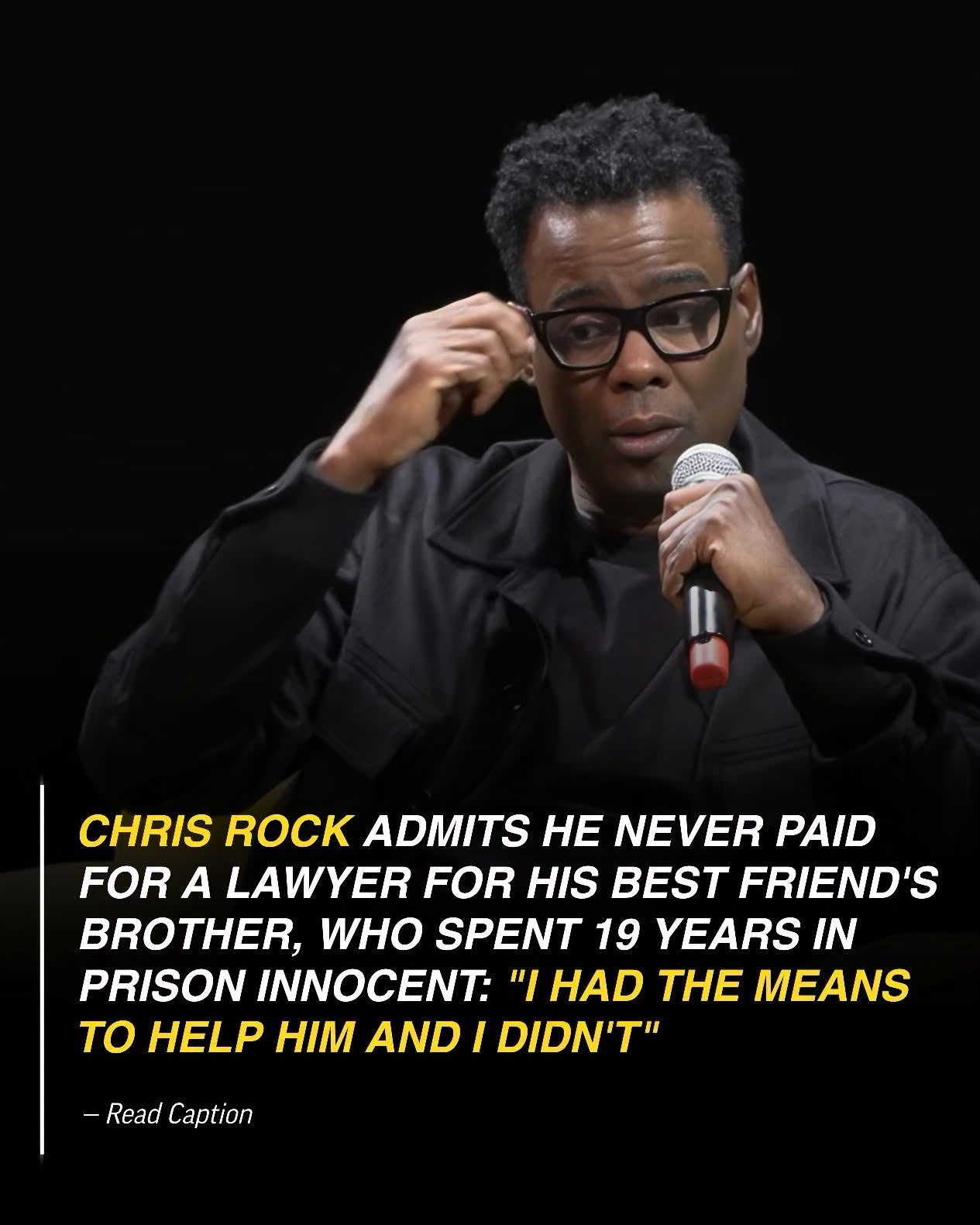
  • Roger Logan spent 19 years in prison for something he didn’t do.… See more

    Roger Logan spent 19 years in prison for something he didn’t do.… See more

    Chris Rock, Roger Logan, and the 19 Years That Could Never Be Given Back

    For 19 years, Roger Logan lived with something no innocent person should ever have to endure: prison for a crime he did not commit.

    Behind the walls of a prison, time moves differently. Years that might otherwise be filled with family celebrations, friendships, careers, ordinary conversations, and everyday moments disappear one day at a time. For Logan, 19 years were taken from him.

    His story also carried a deeply personal connection to comedian Chris Rock.

    Rock and Logan came from the same neighborhood. Logan’s brother was not simply an acquaintance of Rock’s; he was one of Rock’s best friends. Their connection went back years, to a time before fame, wealth, and celebrity changed the comedian’s life.

    That connection eventually put Rock in an uncomfortable position.

    For years, Logan’s brother asked Chris Rock to help pay for a lawyer who could assist his brother. Rock had become successful and had the financial means to contribute. Yet he did not.

    That decision became one of the most complicated parts of the story—not because Rock believed Logan was guilty, but precisely because he says he did not.

    Rock later acknowledged that he had the money to help. He also made clear that his decision was not based on an assumption that Logan deserved to be in prison. Instead, Rock explained that he had always kept his distance from lawyers and legal situations.

    His reasoning was simple, but also revealing: once you get involved, you may not know where it starts or where it ends.

    For Rock, the issue was not necessarily money. It was the fear of becoming entangled in a complicated legal situation whose boundaries he could not see.

    Still, knowing that someone you know is imprisoned for a crime they did not commit—and knowing that you have the resources to help—creates an uncomfortable moral question.

    What do you owe someone from your past?

    And what happens when helping one person means stepping into a world you have deliberately avoided?

    A friendship that existed before fame

    Chris Rock’s connection to Logan was rooted in the neighborhood where they grew up.

    Before Rock became a household name, before stand-up comedy brought him national attention, and before he became one of the most recognizable comedians in the world, he was simply a young man growing up around other young people.

    Among those people was Roger Logan’s brother.

    The two became close friends. Their friendship belonged to an earlier chapter of Rock’s life, when relationships were based less on status and more on shared experiences.

    That history made Logan’s imprisonment especially difficult to separate from Rock’s own past.

    Logan was not a complete stranger whose name happened to appear in a newspaper. His brother was someone Rock knew well.

    For years, that friend reportedly appealed to Rock for financial help to secure legal representation for Logan.

    The requests continued, but Rock did not provide the money.

    From the outside, it might be easy to interpret such a decision in the harshest possible way. A wealthy celebrity was asked to help an apparently innocent man and chose not to. But Rock’s later explanation complicates that interpretation.

    He did not say he refused because he believed Logan was guilty.

    He did not say he lacked the money.

    In fact, he admitted the opposite.

    He could have helped financially.

    He simply chose not to enter the legal situation.

    The complicated line between money and involvement

    One of the most interesting aspects of Rock’s explanation is that it goes beyond the question of whether he could afford to help.

    By the time Logan’s case became an issue for him, Rock had achieved a level of financial success that made the cost of a lawyer less personally threatening than it might have been for an ordinary person.

    Yet Rock saw the decision through a different lens.

    Lawyers and legal cases, in his view, can create complicated obligations. What begins as a simple contribution can become something much larger.

    You might pay for a lawyer.

    Then there could be questions.

    You might be asked to become involved.

    You might be expected to provide information.

    You might become connected to other people involved in the case.

    The situation could expand beyond the original request.

    Rock’s concern was essentially that there is no easy way to know where that involvement begins or where it ends.

    That perspective does not necessarily make the decision easy to judge.

    It does, however, show that Rock understood the distinction between having the ability to help and being willing to become part of a legal battle.

    Those are not always the same thing.

    The weight of 19 years

    For Roger Logan, however, the consequences were enormous.

    Nineteen years is an extraordinary amount of time.

    It is long enough for children to become adults. It is long enough for friendships to change, neighborhoods to transform, and entire chapters of people’s lives to disappear.

    Someone who enters prison at one stage of life can emerge into a world that feels almost unrecognizable.

    Technology changes.

    People move away.

    Relationships evolve.

    Family members age.

    Friends build careers and families.

    The person who comes home after nearly two decades is forced to reconnect with a life that continued without him.

    For Logan, freedom eventually came.

    But freedom after wrongful imprisonment is not simply the opposite of incarceration. There is a process of rebuilding. A person has to find a way to live with years that cannot be recovered.

    No amount of money can return those birthdays, conversations, ordinary afternoons, or opportunities.

    And no apology can literally give someone back the time that was taken from them.

    That is what makes wrongful imprisonment so devastating.

    The injustice is not limited to the prison sentence itself. The damage stretches into the years afterward.

    The reunion

    One of the most striking parts of the story is what happened when Rock and Logan eventually saw each other again.

    After 19 years had passed, there was an obvious gulf between the two men.

    One had spent nearly two decades behind bars.

    The other had spent those years building a remarkable career and becoming an international celebrity.

    Their lives had moved in dramatically different directions.

    Yet when they reunited, something familiar remained.

    They were able to talk and reconnect almost as though the years had not completely erased the friendship and familiarity that existed before Logan went to prison.

    That moment carries a strange mixture of sadness and warmth.

    On one hand, it demonstrates the resilience of human relationships. Nineteen years can change almost everything, but sometimes a connection formed in youth survives the passage of time.

    On the other hand, it highlights just how much had been lost.

    They could reconnect.

    But they could not rewind the clock.

    The fact that the conversation felt natural did not make the missing years disappear.

    The uncomfortable question of responsibility

    Rock’s story raises a question that goes beyond celebrity and money.

    When someone you know is in serious trouble, how much responsibility do you have to help?

    There is no universal answer.

    People have different boundaries, different fears, and different understandings of responsibility. A person may have the financial ability to solve a problem without believing that they are personally obligated to do so.

    At the same time, money can create opportunities to intervene in situations where other people have no options.

    That tension is particularly powerful in Logan’s case.

    Rock had resources.

    Logan needed legal help.

    Logan’s brother repeatedly asked for assistance.

    And yet Rock stayed away.

    The decision may be uncomfortable, but Rock’s willingness to admit that he could have helped makes the story more complicated than a simple tale of generosity or cruelty.

    He did not hide behind the claim that he was broke.

    He did not pretend that the money was impossible to find.

    Instead, he acknowledged that he had the means and chose not to become involved.

    There is a certain honesty in that admission, even if people may disagree with the choice.

    Fame changes the meaning of an old friendship

    The story also illustrates something that can happen when someone becomes famous.

    Old relationships do not necessarily disappear when fame arrives. Instead, they can become more complicated.

    A person who knew you before you were successful may suddenly see you as someone capable of doing things that ordinary people cannot.

    If a friend needs $500, the request may be manageable.

    If a friend needs substantial money for legal representation, the situation can become different.

    The celebrity may be viewed not only as a friend but as a potential source of rescue.

    That creates a difficult dynamic.

    The person asking may feel that a friend with money should help.

    The celebrity may feel that friendship does not automatically create financial or legal obligations.

    Neither perspective completely eliminates the other.

    In Rock’s case, the friendship with Logan’s brother meant that the request carried emotional weight. But Rock’s concerns about becoming involved in the legal system ultimately outweighed his willingness to participate.

    The irony of the ending

    Perhaps the most powerful irony is that after all those years, the relationship did not seem to require an elaborate explanation.

    When Rock and Logan finally reunited, they were able to speak and reconnect.

    The passage of time had not completely destroyed their connection.

    That may be one of the most human parts of the entire story.

    People often imagine that 19 years would make two people strangers. Sometimes it does. But shared history can remain remarkably durable.

    A familiar voice, a memory, an old joke, or a simple conversation can bridge years that otherwise seem impossible to cross.

    For Logan, however, the reunion could not erase what happened.

    He had lost 19 years.

    Rock could reconnect with him, talk to him, and remember the person he had known before prison.

    But neither friendship nor success could restore the years that had been taken away.

    More than a story about Chris Rock

    It would be easy to frame the story entirely around Chris Rock.

    He is, after all, the famous figure involved.

    But at its center, the story belongs to Roger Logan.

    The most important fact is not that a celebrity declined to pay for a lawyer.

    It is that a man spent 19 years in prison for something he did not do.

    Rock’s role adds a layer of moral complexity, particularly because he later acknowledged that he had the money to help.

    But Logan’s experience is the reason the story matters.

    Wrongful imprisonment forces society to confront the enormous consequences of mistakes within the justice system. A person can eventually walk out of prison, but the years spent inside cannot be returned.

    And when that person emerges, the world has moved forward without them.

    A complicated legacy

    Chris Rock’s decision remains open to interpretation.

    Some people may see it as a failure to help a friend’s family when he had the means.

    Others may understand his reluctance to become involved in a legal case, particularly when he feared that writing a check could lead to obligations he did not anticipate.

    Rock himself did not present the decision as a financial impossibility.

    He presented it as a boundary.

    That distinction matters.

    At the same time, boundaries can have consequences.

    For Logan, the consequence was that his brother’s repeated appeals for assistance did not result in Rock’s financial involvement.

    Eventually, Logan was freed.

    And when he and Rock met again, the years between them did not completely destroy their ability to connect.

    Their reunion serves as both a testament to friendship and a reminder of lost time.

    Nineteen years is a lifetime within a lifetime.

    It is long enough to change a person, a family, and a community.

    The fact that two people can meet again after such a separation and still find something familiar in each other is remarkable.

    But perhaps the most haunting part of the story is that their conversation could feel almost as though no time had passed—when, in reality, 19 years had passed.

    For Roger Logan, those years were real.

    They were lived behind prison walls.

    They were years he could never recover.

    And that is what ultimately gives the story its emotional weight: not the celebrity involved, not the money that could have been spent, and not even the reunion itself, but the simple truth that time lost to wrongful imprisonment can never be completely given back.

  • She is currently unconscious and on a ventilator.

    She is currently unconscious and on a ventilator.


    What happens to Christa Pike’s body after death row execution

    Teen killer Christa Pike, now 50, is convicted of killing a classmate

    Featured Image Credit: Tennesse Department of Corrections

    Christa Pike's chilling final hours in countdown to execution before she meets ultimate punishment

    Christa Pike’s chilling final hours in countdown to execution before she meets ultimate punishment

    Christa Pike will become the first woman to be executed in the state of Tennessee in 200 years today (30 September)

    Britt Jones

    Featured Image Credit: WKRN


  • This image knows your personality—what did you see first?

    This image knows your personality—what did you see first?

    🦁 The Psychology of “What You See First” Images: A 2000-Word Exploration

    Introduction

    Art and psychology often intersect in fascinating ways. One of the most popular examples is the genre of optical illusion personality tests, where a single image contains multiple hidden figures, and the first thing you notice is said to reveal something about your inner self. The image you provided — a sculptural face composed of animals like lions, birds, fish, and snakes — is a striking example. It invites viewers to reflect on their subconscious priorities, flaws, and tendencies.

    This article will explore the history, psychology, symbolism, and cultural impact of such images, while also analyzing the specific animals in this artwork and what they might represent.

    🖼️ The Origins of Projective Personality Tests

    • Rorschach inkblots: In the early 20th century, Hermann Rorschach developed inkblot tests to analyze unconscious thought patterns.
    • Ambiguous stimuli: The principle is that when faced with unclear images, people project their own emotions and traits onto them.
    • Modern adaptations: Today, viral social media tests use animals, faces, or objects hidden in art to spark curiosity and self-reflection.

    🧠 The Psychology of First Impressions

    Why does the first animal you see matter?

    • Selective attention: Your brain filters overwhelming visual data, prioritizing what feels most relevant.
    • Emotional state: Anxiety, optimism, or fatigue can influence what stands out.
    • Personality traits: Some psychologists argue that consistent choices across tests reveal stable traits, like introversion or dominance.

    🐾 Symbolism of Animals in Personality Tests

    Each animal in the sculpture carries symbolic weight. Let’s break them down:

    🦁 Lion

    • Traits: Courage, leadership, dominance.
    • Flaw revealed: Pride or arrogance. Seeing the lion first may suggest overconfidence or a tendency to control others.

    🐍 Snake

    • Traits: Transformation, cunning, adaptability.
    • Flaw revealed: Manipulation or hidden resentment. Spotting the snake first may indicate suspicion or difficulty trusting.

    🐦 Birds

    • Traits: Freedom, communication, spirituality.
    • Flaw revealed: Restlessness or avoidance. Seeing birds first may suggest difficulty staying grounded or committing.

    🐟 Fish

    • Traits: Intuition, flow, adaptability.
    • Flaw revealed: Escapism. Fish-first viewers may struggle with confronting problems directly.

    🦁🐾 Lion cubs

    • Traits: Innocence, potential, vulnerability.
    • Flaw revealed: Naivety or dependence. Spotting cubs first may suggest immaturity or fear of responsibility.

    🎨 The Artistic Dimension

    This sculpture is more than psychology — it’s art.

    • Composite imagery: The blending of animals into a human face reflects the idea that humans embody multiple instincts.
    • Lighting and texture: Shadows emphasize different animals depending on where you focus, reinforcing the illusion.
    • Interactive art: Unlike static paintings, this piece demands active participation from the viewer.
    • 46 Fantastic Hand Painted Illusion

    • The Iconic Symbolism of Lions in African Paintings - TingaTinga African Art

    • The Divine Serpent: Exploring the Symbolism and Significance of Snakes ...

    🌍 Cultural Interpretations

    Different cultures interpret animals differently:

    • Western traditions: Lions symbolize bravery; snakes often represent deceit.
    • Eastern traditions: In Hinduism, snakes (Nāgas) symbolize protection and wisdom; fish symbolize fertility and abundance.
    • Indigenous traditions: Birds often represent messengers between worlds.

    Thus, the same image may reveal different “flaws” depending on cultural background.

    📱 The Rise of Viral Personality Tests

    • Social media appeal: Quick, shareable, and fun.
    • Community engagement: People compare results, sparking conversations.
    • Gamification of psychology: Turning introspection into entertainment.

    🧩 Criticisms and Limitations

    • Not scientific: These tests lack empirical validation.
    • Mood-dependent: What you see today may differ tomorrow.
    • Confirmation bias: People interpret results to fit their self-image.

    Yet, their popularity shows a deep human desire for self-understanding.

    🔍 Deep Dive: Worst Flaws Revealed

    The text on the image says: “The first animal you see will reveal your worst flaw.” Let’s analyze:

    • Lion first → Flaw: Pride, dominance.
    • Snake first → Flaw: Distrust, manipulation.
    • Bird first → Flaw: Flightiness, lack of focus.
    • Fish first → Flaw: Escapism, avoidance.
    • Cubs first → Flaw: Immaturity, dependence.

    This framework encourages viewers to confront uncomfortable truths rather than flattering traits.

    🧭 Why We’re Drawn to Flaws

    • Self-improvement: Identifying flaws is the first step toward growth.
    • Curiosity: People enjoy discovering hidden aspects of themselves.
    • Social bonding: Sharing flaws makes conversations more authentic.

    📖 Case Studies

    • Example 1: A leader who sees the lion first may recognize their tendency to dominate meetings.
    • Example 2: An artist who sees fish first may realize they avoid practical responsibilities.
    • Example 3: A student who sees cubs first may confront their reliance on mentors.

    🧩 Integrating Psychology and Art

    This sculpture exemplifies how art can function as a psychological mirror. It blends:

    • Visual ambiguity → triggers projection.
    • Animal symbolism → provides interpretive depth.
    • Human face structure → reminds us flaws are part of identity.

    🌟 Conclusion

    The image you shared is more than a curiosity — it’s a fusion of art, psychology, and symbolism. Whether you see a lion, snake, bird, fish, or cubs first, the interpretation invites reflection on your flaws. While not scientific, these tests spark meaningful conversations about self-awareness and growth.

    Ultimately, the lesson is clear: our flaws are part of our humanity, and recognizing them is the first step toward balance.

  • Happy Heavenly Birthday, Olivia Newton-John… See more

    Happy Heavenly Birthday, Olivia Newton-John… See more


    Olivia Newton-John (September 26, 1948 – August 8, 2022) was a British-born Australian singer and actress whose warm, instantly recognizable voice carried her from country-pop success in the 1970s to international superstardom. Over a career spanning five decades, she sold more than 100 million records and became one of the most popular female performers of her generation.


    Her early hits included Let Me Be There, If You Love Me (Let Me Know), I Honestly Love You and Have You Never Been Mellow. Then came Grease in 1978. As Sandy opposite John Travolta, Newton-John reached an enormous new audience through Hopelessly Devoted to You, You’re the One That I Want and Summer Nights. A few years later she reinvented herself again with Physical, which spent ten weeks at No. 1 on the Billboard Hot 100.


    Newton-John won four Grammy Awards and received twelve nominations during her career. She also became a prominent advocate for cancer research and wellness after her own experience with breast cancer. She died on August 8, 2022, aged 73. Today, 78 years after her birth, we remember a performer whose music and films remain part of the soundtrack of several generations.

  • Kevin Costner Reveals What He Really Thinks About Finding Love Again at 71 More details in the comments.👇

    Kevin Costner Reveals What He Really Thinks About Finding Love Again at 71 More details in the comments.👇

    At 70, Kevin Costner is proving that it’s never too late to open your heart to new beginnings. The Oscar-winning actor and director, known for timeless roles in Dances with Wolves and Yellowstone, is reportedly embracing a fresh chapter in his personal life — one that involves romance.


    Following his high-profile split in 2023, Costner has largely focused on family, film projects, and his passion for storytelling. But according to sources close to the actor, love has quietly returned to his life, bringing a renewed sense of joy and optimism.


    While Costner has kept details of the relationship private, friends say he’s “smiling more these days” and enjoying a slower, more intentional approach to romance. “He’s not chasing anything — it just naturally found him,” one insider shared.


    As he continues to balance a legendary career with newfound personal happiness, Costner is once again reminding fans that age is just a number — and that love, no matter when it comes, is always worth the wait.

  • My husband threw me and our two children out of the house for his mistress, convinced that after 18 years of marriage, i had nothing left. That first night, with nowhere else to go, I stood at a stranger’s door and said, “Please let me stay here with my two children. I’ll take care of the entire house for free.” I lowered my head and stepped inside quietly. But the man who opened the door had done business with my husband—and he remembered a certain amount of money my husband had desperately wanted me to forget. PART 1 “If you let me stay here with my kids, I’ll work for free. I’ll cook, I’ll clean, I’ll do whatever you need. I just need a place for them to sleep tonight.” Evelyn Vance never imagined she would ever say those words standing on the porch of an unfamiliar home in the wealthy suburbs of Greenwich, Connecticut. It was nearly eight o’clock at night. Seven-year-old Leo carried a dinosaur backpack, holding a plastic grocery bag filled with the few clothes they’d managed to grab. Four-year-old Nora was asleep on her mother’s shoulder, exhausted after three days of bouncing between temporary couches. First, they had stayed with a friend of Evelyn’s. Then, at a cousin’s cramped apartment. But Evelyn knew those uncomfortable looks all too well—the silent tension that creeps in when a visitor stays past their welcome. Her husband, Julian Vance, had made his terms crystal clear. “I want a divorce. I’m seeing someone else. And don’t waste your time trying to fight me for money. The house is registered under my mother’s name, the cars belong to the company, and every single bank account is protected. You have nothing.” Eighteen years of marriage, reduced to four cold sentences. Evelyn had given up her career when Leo was born. Before that, she had managed a medical clinic. But then came the children, the house, Julian’s corporate commitments, formal dinners with clients, and an entire life organized around building his career. Now, at forty-two, she had no home, no income, and not enough savings to rent an apartment on her own. That was why she had chosen this quiet, leafy street. She didn’t know anyone in the neighborhood. She had simply decided to knock on doors until she found one that didn’t shut in her face. The intercom remained silent for several long seconds. Evelyn thought she was going to be ignored. Then, the heavy wrought-iron gate began to click open automatically. “Mommy,” Leo whispered softly, “if they have a dog, tell them I know how to take care of it.” Evelyn fought back tears. “I will, sweetie.” They walked up a gently illuminated stone pathway to a massive, elegant estate. Before they even reached the entrance, the heavy oak front door swung open. The man standing on the threshold made Evelyn freeze in her tracks. Arthur Vance. Julian’s long-time business partner. The very same man who had been a groomsman at her wedding nearly twenty years ago. Arthur recognized her instantly. “Evelyn?” She couldn’t bring herself to speak. Leo, trying to break the heavy silence, pointed to his little sister. “That’s Nora. She’s sleeping. I’m Leo. Do you have a dog?” Arthur looked down at the boy. “No.” Leo looked down at his sneakers. “But maybe I’ll get one someday,” Arthur added softly. “Come inside.” Half an hour later, Nora was fast asleep on a plush sofa, and Leo was devouring a turkey sandwich, trying to eat slowly so no one would notice how hungry he actually was. Arthur sat across from Evelyn in the quiet study. “What did Julian do?” Evelyn told him everything. The affair. The sudden divorce demand. Being thrown out of their home. Julian’s threats that she would never see a single dime. Arthur listened in total silence. Finally, he asked, “What about the townhouse you inherited from your parents?” Evelyn looked up, her expression hollow. “It’s gone.” “What do you mean it’s gone?” “I sold it seventeen years ago.” “Why?” It took Evelyn a moment to find her voice. “To give Julian the capital to start Vance Global.” Arthur went completely still. “What did you say?” “When Julian started the firm, he didn’t have any money. I had inherited a small townhouse in Boston from my parents. I sold it and handed him almost every single dollar.” Arthur slowly stood up from his chair. “Julian told me that money was a personal loan from a rich uncle.” Evelyn frowned. “Julian didn’t have a rich uncle. His family was struggling just to make mortgage payments back then.” The color drained from Arthur’s face… Part 2 is already in the first comment Type “MEET” and press LIKE if you want to continue reading till the end of this story 👇 See less

    My husband threw me and our two children out of the house for his mistress, convinced that after 18 years of marriage, i had nothing left. That first night, with nowhere else to go, I stood at a stranger’s door and said, “Please let me stay here with my two children. I’ll take care of the entire house for free.” I lowered my head and stepped inside quietly. But the man who opened the door had done business with my husband—and he remembered a certain amount of money my husband had desperately wanted me to forget. PART 1 “If you let me stay here with my kids, I’ll work for free. I’ll cook, I’ll clean, I’ll do whatever you need. I just need a place for them to sleep tonight.” Evelyn Vance never imagined she would ever say those words standing on the porch of an unfamiliar home in the wealthy suburbs of Greenwich, Connecticut. It was nearly eight o’clock at night. Seven-year-old Leo carried a dinosaur backpack, holding a plastic grocery bag filled with the few clothes they’d managed to grab. Four-year-old Nora was asleep on her mother’s shoulder, exhausted after three days of bouncing between temporary couches. First, they had stayed with a friend of Evelyn’s. Then, at a cousin’s cramped apartment. But Evelyn knew those uncomfortable looks all too well—the silent tension that creeps in when a visitor stays past their welcome. Her husband, Julian Vance, had made his terms crystal clear. “I want a divorce. I’m seeing someone else. And don’t waste your time trying to fight me for money. The house is registered under my mother’s name, the cars belong to the company, and every single bank account is protected. You have nothing.” Eighteen years of marriage, reduced to four cold sentences. Evelyn had given up her career when Leo was born. Before that, she had managed a medical clinic. But then came the children, the house, Julian’s corporate commitments, formal dinners with clients, and an entire life organized around building his career. Now, at forty-two, she had no home, no income, and not enough savings to rent an apartment on her own. That was why she had chosen this quiet, leafy street. She didn’t know anyone in the neighborhood. She had simply decided to knock on doors until she found one that didn’t shut in her face. The intercom remained silent for several long seconds. Evelyn thought she was going to be ignored. Then, the heavy wrought-iron gate began to click open automatically. “Mommy,” Leo whispered softly, “if they have a dog, tell them I know how to take care of it.” Evelyn fought back tears. “I will, sweetie.” They walked up a gently illuminated stone pathway to a massive, elegant estate. Before they even reached the entrance, the heavy oak front door swung open. The man standing on the threshold made Evelyn freeze in her tracks. Arthur Vance. Julian’s long-time business partner. The very same man who had been a groomsman at her wedding nearly twenty years ago. Arthur recognized her instantly. “Evelyn?” She couldn’t bring herself to speak. Leo, trying to break the heavy silence, pointed to his little sister. “That’s Nora. She’s sleeping. I’m Leo. Do you have a dog?” Arthur looked down at the boy. “No.” Leo looked down at his sneakers. “But maybe I’ll get one someday,” Arthur added softly. “Come inside.” Half an hour later, Nora was fast asleep on a plush sofa, and Leo was devouring a turkey sandwich, trying to eat slowly so no one would notice how hungry he actually was. Arthur sat across from Evelyn in the quiet study. “What did Julian do?” Evelyn told him everything. The affair. The sudden divorce demand. Being thrown out of their home. Julian’s threats that she would never see a single dime. Arthur listened in total silence. Finally, he asked, “What about the townhouse you inherited from your parents?” Evelyn looked up, her expression hollow. “It’s gone.” “What do you mean it’s gone?” “I sold it seventeen years ago.” “Why?” It took Evelyn a moment to find her voice. “To give Julian the capital to start Vance Global.” Arthur went completely still. “What did you say?” “When Julian started the firm, he didn’t have any money. I had inherited a small townhouse in Boston from my parents. I sold it and handed him almost every single dollar.” Arthur slowly stood up from his chair. “Julian told me that money was a personal loan from a rich uncle.” Evelyn frowned. “Julian didn’t have a rich uncle. His family was struggling just to make mortgage payments back then.” The color drained from Arthur’s face… Part 2 is already in the first comment Type “MEET” and press LIKE if you want to continue reading till the end of this story 👇 See less

    “It was around eight hundred thousand dollars.”

    Silence.

    Leo was still in the adjoining room, happily watching television. Nora slept peacefully on the sofa upstairs.

    But inside the study, the air seemed to disappear.

    Arthur slowly lowered himself back into his chair.

    “Eight hundred thousand,” he repeated.

    “It was everything I had.”

    Arthur rubbed his forehead.

    “That wasn’t a loan from his uncle.”

    “No.”

    “He told me—”

    “I know what he told you.”

    Arthur stared at her.

    “You understood what he was doing with that money?”

    Evelyn’s eyebrows drew together.

    “Of course I did. I gave it to him.”

    “No,” Arthur said quietly. “I mean… did you understand where it went?”

    Evelyn shook her head.

    “Julian told me he was going to start a consulting company. He said he needed enough capital to survive the first year. I believed him.”

    Arthur stood again.

    He walked toward the enormous windows overlooking the dark backyard.

    “You sold your parents’ townhouse.”

    “Yes.”

    “You gave Julian the proceeds.”

    “Yes.”

    “And he told me his uncle financed him.”

    Evelyn nodded.

    Arthur turned around.

    “Then Julian lied to both of us.”

    A cold sensation moved through Evelyn’s chest.

    She had spent three days being told she had nothing.

    Nothing in the house.Nothing in the bank.

    Nothing in the company.

    Nothing that could legally protect her.

    But suddenly, for the first time, she wondered whether Julian’s favorite word—nothing—had been a lie from the beginning.

    “Arthur,” she said slowly, “what are you saying?”

    Arthur didn’t answer immediately.

    Instead, he crossed the room to an antique cabinet and pulled open the bottom drawer.

    Inside were several old leather folders.

    He searched through them.

    Evelyn watched him.

    “What are those?”

    “Documents.”

    “About Julian?”

    Arthur stopped.

    “About Vance Global.”

    He pulled out a folder so old that its edges had begun to yellow.

    Then he placed it on the desk.

    Evelyn stared at it.

    Arthur opened the folder.

    The first page was a photocopy of a bank transfer.

    Evelyn leaned forward.

    The amount made her breath catch.

    $800,000.

    Her eyes widened.

    “That’s my money.”

    Arthur nodded.

    “It went into an account belonging to Vance Global.”

    Evelyn stared at the date.

    Seventeen years earlier.

    Three days after she had sold the townhouse.

    Her fingers began to tremble.

    “I didn’t know this.”

    “I know.”

    Arthur turned another page.

    “This is the incorporation paperwork.”

    Evelyn scanned the names.

    Julian Vance.

    Arthur Vance.

    And another name.

    She stopped.

    “Who’s Daniel Cross?”

    Arthur’s expression changed.

    “You don’t remember him?”

    “No.”

    “You should.”

    Evelyn shook her head.

    Arthur closed the folder.

    “Daniel Cross was Julian’s first investor.”

    “But you just said I was the investor.”

    “You were.”

    “Then who was he?”

    Arthur looked toward the hallway.

    His voice dropped.

    “That’s the problem.”

    A floorboard creaked upstairs.

    Both of them looked toward the ceiling.

    Arthur immediately closed the folder.

    Evelyn noticed.

    “What?”

    “Nothing.”

    “No. You just looked frightened.”

    Arthur shook his head.

    “I didn’t.”

    “You did.”

    He lowered his voice.

    “Evelyn, there are things about that company you don’t know.”

    She stared at him.

    “Then tell me.”

    Arthur remained silent.

    “After eighteen years, don’t tell me there are things I don’t know,” Evelyn said. “I’ve spent my entire adult life defending Julian. I’ve stood beside him at dinners. I entertained his clients. I raised his children while he built that company.”

    Her voice cracked.

    “And now I’m sleeping on somebody else’s sofa because he says I contributed nothing.”

    Arthur looked at her with an expression she couldn’t quite understand.

    Regret.

    Perhaps guilt.

    “I should have asked questions seventeen years ago,” he said.

    “What questions?”

    Arthur looked down at the folder.

    “The first one should have been why Julian needed exactly eight hundred thousand dollars.”

    Evelyn stared at him.

    “And the second?”

    Arthur hesitated.

    “Why he needed it in cash.”

    Evelyn’s stomach tightened.

    “What?”

    “He didn’t deposit the money directly.”

    Arthur opened another document.

    “He transferred it through three separate companies before it reached Vance Global.”

    “Why?”

    “I don’t know.”

    “You’re his business partner.”

    “I know.”

    “You worked with him for almost two decades.”

    “I know.”

    “Then how don’t you know?”

    Arthur’s eyes hardened.

    “Because Julian made sure I never saw everything.”

    The words hung between them.

    For the first time, Evelyn realized something terrifying.

    Arthur wasn’t merely surprised.

    He was afraid.

    She reached toward the folder.

    Arthur stopped her hand.

    “Don’t.”

    “Why?”

    “Because once you start looking, you won’t be able to pretend you don’t know.”

    Evelyn looked at him.

    “I’ve already lost my home.”

    Her voice was quiet.

    “My husband threw me and my children onto the street. What else do I have left to lose?”

    Arthur slowly removed his hand.

    “Your safety.”

    Evelyn froze.

    “What does that mean?”

    Before Arthur could answer, a sound came from upstairs.

    A soft thump.

    Then another.

    Evelyn immediately stood.

    “Nora.”

    She rushed toward the stairs.

    Arthur followed.

    They reached the living room.

    Nora was still asleep on the sofa.

    Leo was gone.

    Evelyn’s heart stopped.

    “Leo?”

    No answer.

    “Leo!”

    She ran through the hallway.

    Arthur checked the kitchen.

    Nothing.

    Then they heard a faint sound from the study.

    A drawer opening.

    Evelyn ran back.

    Leo stood beside Arthur’s desk.

    He was holding something.

    A small black envelope.

    “Mommy,” he said innocently, “I found this under the papers.”

    Evelyn’s blood went cold.

    Arthur rushed forward.

    “Give me that.”

    Leo held it tighter.

    “But there’s a picture inside.”

    Arthur stopped.

    “What picture?”

    Leo pulled a photograph halfway out of the envelope.

    Evelyn saw it.

    A younger Julian stood outside a building.

    Beside him was Arthur.

    And beside Arthur was a woman Evelyn had never seen before.

    But that wasn’t what frightened her.

    In the woman’s arms was a baby.

    On the back of the photograph, someone had written a date.

    The same date Evelyn and Julian had officially incorporated Vance Global.

    Evelyn stared at the photograph.

    “Who is she?”

    Arthur didn’t answer.

    “Arthur.”

    He took the photograph from Leo.

    His face had gone pale again.

    Evelyn stepped closer.

    “Who is that woman?”

    Arthur finally looked at her.

    “Her name was Claire Mercer.”

    “Was?”

    “She died seventeen years ago.”

    Evelyn’s breath caught.

    “How?”

    Arthur’s eyes shifted toward the photograph.

    “Car accident.”

    “Was she connected to Julian?”

    Arthur said nothing.

    “Was she?”

    “Yes.”

    “How?”

    Arthur swallowed.

    “She was Julian’s first wife.”

    Evelyn felt as though the floor had disappeared beneath her.

    “First wife?”

    Arthur nodded.

    “Julian was married before you?”

    “Yes.”

    “Why didn’t I know?”

    “Because the marriage was annulled.”

    Evelyn shook her head.

    “No. Julian told me he’d never been married.”

    “I know.”

    She stared at him.

    “Then why would he lie about something like that?”

    Arthur looked at the photograph again.

    “Because Claire didn’t just leave him.”

    “What happened?”

    “She disappeared.”

    Evelyn’s heart began pounding.

    “Arthur, you just said she died.”

    “I said that’s what everyone was told.”

    Silence.

    Evelyn looked at the photograph.

    Then at the black envelope.

    Then back at Arthur.

    “What are you saying?”

    Arthur opened his mouth.

    Before he could speak, his phone rang.

    He looked at the screen.

    The caller ID showed no name.

    Only a number.

    Arthur didn’t answer.

    The phone stopped.

    A second later, it rang again.

    He rejected the call.

    Then a message appeared.

    Arthur read it.

    His face changed.

    Evelyn stepped toward him.

    “What does it say?”

    He didn’t respond.

    “Arthur.”

    He finally handed her the phone.

    There was only one sentence.

    Stop digging into the eight hundred thousand.

    Evelyn stared at the screen.

    Then another message appeared.

    Julian is not the man you think he is.

    A third message followed.

    And neither is Arthur.

    Evelyn slowly looked up.

    Arthur was staring at her.

    Neither of them spoke.

    For the first time that night, Evelyn wondered whether knocking on Arthur’s door had been the worst decision she had ever made.

    Or the first good decision she had made in eighteen years.

    She looked at the photograph again.

    The baby in Claire’s arms had a small silver bracelet around one wrist.

    Evelyn recognized it.

    Her own mother had given her an identical bracelet the year before she died.

    Except this one had a tiny engraved letter.

    N.

    Evelyn’s voice became barely audible.

    “Arthur…”

    He looked at her.

    “Who was the baby?”

    Arthur’s silence was answer enough.

    Evelyn’s heart began pounding.

    “Who was that child?”

    Arthur closed his eyes.

    Then he whispered four words that changed everything.

    “That child was Julian’s.”

    Evelyn stared at him.

    “No.”

    Arthur said nothing.

    “That’s impossible.”

    “I wish it were.”

    “Where is the child now?”

    Arthur looked toward the dark windows.

    “I don’t know.”

    Evelyn stepped backward.

    Then she noticed something she hadn’t seen before.

    The photograph wasn’t seventeen years old.

    The photograph itself was.

    But someone had written something on the back recently.

    Fresh ink.

    A phone number.

    And underneath it, four words:

    Ask Evelyn about Nora.

    Evelyn’s entire body went cold.

    She looked toward the living room.

    Her four-year-old daughter was still sleeping peacefully.

    Arthur followed her gaze.

    Neither of them moved.

    Then Nora stirred.

    Her eyes slowly opened.

    “Mommy?”

    Evelyn rushed to her.

    Nora reached up sleepily and wrapped her arms around her mother’s neck.

    “I had a dream.”

    Evelyn held her tightly.

    “What did you dream about, sweetheart?”

    Nora rubbed her eyes.

    “The lady.”

    Evelyn froze.

    “What lady?”

    “The lady who was crying.”

    Arthur stepped closer.

    “What did she look like?”

    Nora looked at him.

    Then she pointed toward the photograph.

    “That lady.”

    Evelyn’s blood ran cold.

    “Claire?”

    Nora nodded.

    “She told me Daddy was sorry.”

    Arthur stared at the little girl.

    Evelyn’s hands began shaking.

    “Nora,” she whispered, “when did you see her?”

    Nora looked confused.

    “Last night.”

    “Last night where?”

    “In Daddy’s house.”

    Evelyn could barely breathe.

    “But you weren’t there.”

    Nora frowned.

    “Yes, Mommy.”

    She pointed toward the hallway.

    “Daddy took me into the room with the secret door.”

    Arthur suddenly grabbed the edge of the desk.

    “What secret door?”

    Nora looked at him.

    “The one Daddy said Mommy must never know about.”

    Evelyn slowly turned toward Arthur.

    Arthur’s face had gone completely white.

    And somewhere outside the house, beyond the iron gates, a car engine started.

    Then the headlights went out.

    Someone was sitting in the darkness.

    Watching the house.

    Watching Evelyn.

    And perhaps waiting for her to discover what Julian had spent seventeen years trying to bury.

    I can continue with Part 3 by taking Evelyn back to Julian’s house to uncover the “secret door,” while slowly revealing who Claire was, what happened to the $800,000, and why Nora may be connected to the mystery.

    I can continue with Part 3 by taking Evelyn back to Julian’s house to uncover the “secret door,”

    slowly revealing who Claire was

    what happened to the $800,000

    why Nora may be connected to the mystery

    PART 3 — THE TRUTH BEHIND THE SECRET DOOR
    The car outside disappeared before Arthur could reach the front door.

    He stood behind the curtain, watching the empty road.

    Evelyn held Nora close.

    Leo stood beside his mother, clutching his dinosaur backpack.

    “Who was that?” Evelyn whispered.

    Arthur didn’t answer.

    Instead, he turned around and looked directly at her.

    “We have to go back to Julian’s house.”

    Evelyn’s heart sank.

    “No.”

    “Yes.”

    “You just told me someone is watching this house.”

    “Exactly.”

    Arthur walked toward the desk and picked up the old photograph.

    “Someone wants you to find the truth. And if we stay here waiting for them to come to us, we’ll never know why.”

    Evelyn looked at her children.

    Then she looked at the photograph.

    The woman.

    The baby.

    The mysterious number.

    The eight hundred thousand dollars.

    And the secret room Julian had hidden from her for seventeen years.

    She finally nodded.

    “Let’s go.”

    Julian’s mansion was dark when they arrived.

    The driveway was empty.

    The enormous house where Evelyn had once hosted Christmas dinners and birthday parties now looked strangely unfamiliar.

    She stood at the front door for several seconds.

    Once, she had believed this was her home.

    Now it felt like a crime scene.

    Arthur entered the security code.

    The door opened.

    Inside, everything was exactly where Evelyn remembered it.

    The marble floors.

    The enormous chandelier.

    The paintings Julian had spent millions acquiring.

    The photographs of Julian shaking hands with politicians and CEOs.

    But something had changed.

    Evelyn realized what it was.

    There were no photographs of her.

    Not one.

    Eighteen years of marriage.

    Two children.

    And Julian had somehow managed to erase her from the walls.

    She swallowed hard.

    “He already replaced me,” she whispered.

    Arthur looked at her.

    “No, Evelyn.”

    “What?”

    “He erased you because he was afraid someone would eventually ask what you contributed.”

    Evelyn looked at him.

    “What did I contribute?”

    Arthur held her gaze.

    “You built the foundation of everything he owns.”

    They walked toward Julian’s private office.

    Nora suddenly pointed down the hallway.

    “There.”

    Everyone stopped.

    A narrow wooden door stood at the end of the corridor.

    Evelyn had never noticed it before.

    She walked toward it.

    The door was locked.

    Arthur examined the handle.

    “Stand back.”

    He forced it open.

    Behind it was a narrow staircase leading underground.

    Evelyn’s heart pounded.

    They descended.

    At the bottom was a small room.

    There were filing cabinets.

    Old computers.

    Boxes.

    And a wall covered with photographs.

    Evelyn stepped forward.

    Her breath caught.

    There was Julian.

    Arthur.

    Claire Mercer.

    And Evelyn herself.

    Hundreds of photographs.

    Some were from seventeen years ago.

    Others were recent.

    Evelyn stared at one picture of herself sleeping beside Nora.

    Another showed Leo walking into school.

    Someone had been watching her family for years.

    Arthur whispered, “My God.”

    Evelyn opened one of the cabinets.

    Inside were financial records.

    Bank transfers.

    Property deeds.

    Company agreements.

    And a folder with her name.

    EVELYN VANCE — PERSONAL ASSETS

    Her hands trembled as she opened it.

    The first document was the deed to her parents’ Boston townhouse.

    The second was the sale agreement.

    The third was the bank transfer.

    And beneath it was another document.

    A private agreement between Julian and Evelyn.

    Evelyn stared.

    “I never signed this.”

    Arthur took it.

    The signature at the bottom looked like hers.

    But it wasn’t.

    “I forged this,” Julian said from behind them.

    Everyone froze.

    He stood at the top of the stairs.

    His expensive suit was wrinkled.

    His face looked exhausted.

    But his eyes were cold.

    Evelyn turned around.

    “You followed us.”

    Julian slowly descended.

    “I knew you’d find this place eventually.”

    Arthur stepped in front of Evelyn.

    “You lied to both of us.”

    Julian smiled bitterly.

    “You think you know everything?”

    “No,” Arthur replied. “But I know the eight hundred thousand dollars belonged to Evelyn.”

    Julian’s expression changed.

    Evelyn watched him carefully.

    “Why did you lie?”

    Julian looked at her.

    “Because if you knew what that money became, you’d never have stayed with me.”

    “What did it become?”

    Julian said nothing.

    Arthur opened another folder.

    Inside were documents proving that Evelyn’s money had been used to acquire controlling shares in several companies.

    Shares that, according to the records, belonged to Julian.

    But the original ownership documents told a different story.

    Evelyn’s name was everywhere.

    She had unknowingly funded the company.

    And Julian had spent seventeen years moving those assets through shell companies so her ownership would disappear.

    Arthur looked at her.

    “You weren’t his wife on paper.”

    Evelyn frowned.

    “What?”

    “You were his largest original investor.”

    Julian laughed quietly.

    “Don’t make her sound important, Arthur.”

    Arthur turned toward him.

    “She is.”

    Julian’s face hardened.

    “You don’t understand.”

    “Then explain it.”

    Julian looked at Evelyn.

    “When I met you, I had nothing.”

    Evelyn’s eyes filled with tears.

    “I know.”

    “No. You don’t.”

    He stepped closer.

    “I was drowning. My family was bankrupt. I owed people money. I had creditors calling every morning.”

    Evelyn said nothing.

    “You gave me eight hundred thousand dollars.”

    “I trusted you.”

    “And that’s exactly why I could use it.”

    Evelyn flinched.

    Julian continued.

    “I told myself I’d pay you back.”

    “When?”

    “When the company succeeded.”

    “It succeeded.”

    “Yes.”

    “Then why didn’t you pay me?”

    Julian looked away.

    “Because by then I wanted more.”

    Evelyn’s eyes hardened.

    “You wanted my life.”

    He didn’t answer.

    “You wanted my money. My house. My time. My youth. My children.”

    Her voice broke.

    “And when I had nothing left to give you, you replaced me.”

    Julian finally looked at her.

    “I didn’t replace you.”

    “You brought another woman into my home.”

    “She was never what you think.”

    Evelyn laughed bitterly.

    “Then what was she?”

    Julian looked toward the photographs on the wall.

    “Claire.”

    Arthur stepped forward.

    “Tell her.”

    Julian closed his eyes.

    “Claire wasn’t my first wife.”

    Evelyn stared at him.

    “Then why did you say she was?”

    “Because it was easier than telling the truth.”

    “What truth?”

    Julian’s voice became quieter.

    “Claire was my sister.”

    Silence.

    Evelyn looked at Arthur.

    Arthur seemed just as stunned.

    Julian continued.

    “She discovered what I was doing with the company.”

    “What were you doing?”

    “Moving money.”

    “Whose money?”

    “Investors’. Clients’. Eventually, yours.”

    Evelyn’s stomach tightened.

    “Claire threatened to expose you.”

    Julian nodded.

    “She disappeared.”

    Arthur’s expression hardened.

    “You told everyone she died.”

    “I thought she was dead.”

    “What?”

    Julian looked toward the photograph.

    “Claire survived the crash.”

    Evelyn felt a chill run through her.

    “Then where is she?”

    Julian looked directly at Nora.

    “She left the country.”

    Evelyn’s heart stopped.

    “And the baby?”

    Julian’s face crumpled for the first time.

    “My daughter.”

    Evelyn stared at Nora.

    “Your daughter?”

    Julian nodded.

    “Claire was protecting her from me.”

    Evelyn suddenly understood.

    The photograph.

    The bracelet.

    The mysterious note.

    The secret room.

    But one question remained.

    “Why did you write ‘Ask Evelyn about Nora’?”

    Julian looked at her.

    “I didn’t.”

    Arthur stepped toward him.

    “Then who did?”

    Nobody answered.

    A sound came from the stairs.

    Footsteps.

    Everyone turned.

    A woman appeared.

    Older.

    Pale.

    Her hair streaked with gray.

    But Evelyn recognized her immediately.

    The same eyes.

    The same face.

    The same woman from the photograph.

    Claire.

    Evelyn couldn’t breathe.

    Julian whispered one word.

    “Claire.”

    The woman looked at him.

    “You stole seventeen years from me.”

    Julian lowered his head.

    “I know.”

    Claire’s eyes moved to Evelyn.

    Then to Nora.

    Nora looked at her for several seconds.

    Then smiled.

    “Are you the lady from my dream?”

    Claire’s eyes filled with tears.

    “Yes, sweetheart.”

    She walked slowly toward the little girl.

    Evelyn instinctively pulled Nora closer.

    Claire stopped.

    “I won’t hurt her.”

    Evelyn looked at Julian.

    Then at Claire.

    “What do you want?”

    Claire’s voice trembled.

    “Justice.”

    She handed Evelyn a small envelope.

    “Everything you need is inside.”

    Evelyn opened it.

    There were copies of financial records.

    Bank statements.

    Property deeds.

    Emails.

    And one final document.

    A legal agreement proving that the original eight hundred thousand dollars belonged to Evelyn and that Julian had transferred assets purchased with that money into accounts controlled by her.

    Evelyn stared at the pages.

    For seventeen years, she had believed she had given away her future.

    She finally realized she hadn’t.

    Her future had been stolen.

    And now she had the evidence to take it back.

    Six months later, the divorce was finalized.

    Julian lost control of Vance Global.

    The court recognized Evelyn’s financial contribution to the company and awarded her a substantial portion of the assets that had been concealed from her.

    Arthur testified against Julian.

    Claire testified too.

    But Evelyn never felt victorious.

    There was no celebration.

    No champagne.

    No satisfaction in watching Julian’s world collapse.

    One afternoon, she stood outside the small medical clinic she had purchased with part of the settlement.

    A new sign hung above the door.

    VANCE FAMILY HEALTH CENTER

    Arthur stood beside her.

    “You kept the name.”

    Evelyn smiled.

    “I kept my name.”

    He looked at her.

    “You know you don’t have to prove anything anymore.”

    “I know.”

    Leo ran out of the building.

    “Mom!”

    Nora followed him.

    “Mommy!”

    Evelyn opened her arms.

    Both children ran into them.

    She hugged them tightly.

    For the first time in years, she wasn’t thinking about Julian.

    She wasn’t thinking about the money.

    She wasn’t thinking about what she had lost.

    She was thinking about what remained.

    Her children.

    Her career.

    Her dignity.

    And the woman she had almost forgotten she was.

    Arthur watched quietly.

    “You’re happy,” he said.

    Evelyn looked at him.

    “I think I’m becoming happy.”

    He smiled.

    “That’s different.”

    “It is.”

    She looked at her children.

    “Julian spent eighteen years convincing me that I had nothing.”

    Arthur nodded.

    “And he was wrong.”

    Evelyn smiled.

    “He was wrong about the money.”

    She looked at Nora.

    “He was wrong about my children.”

    Then she looked at the clinic.

    “And he was most wrong about me.”

    Arthur asked softly, “What do you mean?”

    Evelyn took a deep breath.

    “I thought I lost eighteen years.”

    She smiled.

    “But maybe I only spent eighteen years becoming the woman who could finally walk away.”

    Arthur said nothing.

    He didn’t need to.

    Evelyn took her children’s hands.

    Together, they walked toward the clinic.

    Behind them was the life she had once begged to keep.

    Ahead of her was something she had never imagined she could have again.

    A life that belonged entirely to her.

    And this time, no one could convince her that she had nothing.

    Because after everything Julian had taken…

    Evelyn finally understood the one thing he could never steal.