Category: Uncategorized

  • They Cut Down My Trees for Their “View” — So I Closed the Only Road That Leads to Their Neighborhood That’s the short version.… See more

    They Cut Down My Trees for Their “View” — So I Closed the Only Road That Leads to Their Neighborhood
    That’s the short version.
    The kind you tell someone over a drink when they stare at you and say, “No way you actually did that.”
    The real story starts on a Tuesday that felt painfully normal.
    I was sitting at my desk halfway through a turkey sandwich when my sister Mara called.
    Mara never phones during work hours unless something serious is happening—blood, fire, or a problem that’s about to involve lawyers.
    I answered with a mouthful of food.
    “Hey. What’s going on?”
    For a second all I heard was wind and the sound of her breathing like she’d been running.
    “You need to come home,” she said. “Right now.”
    There’s a certain tone people use when they’re trying to stay calm while panic is creeping in.
    That was her voice.
    Tight. Controlled. Almost breaking.
    “What happened?” I asked.
    “Just get here, Eli.”
    I didn’t even shut my computer down. I grabbed my keys, told my manager there was a family emergency, and headed out the door.
    The drive home felt longer than usual.
    Pine Hollow Road is a narrow two-lane stretch that always makes me nervous in bad weather. That afternoon the sky was perfectly clear—bright blue, calm, peaceful.
    But my stomach felt like it was folding in on itself.
    When I turned onto the dirt road leading to my property, I felt it immediately.
    Something was wrong.
    Land feels different when something familiar disappears.
    Like when someone removes a picture from the wall and the paint behind it is still brighter than the rest.
    The six sycamore trees along the eastern side of my land were gone.
    Not broken by wind.
    Not trimmed.
    Gone.
    Those trees had been there for decades. Thick trunks. High branches. They leaned just slightly toward the sunlight like they’d been listening to the world for forty years.
    My dad planted three of them when I was a kid.
    The other three came later.
    Together they formed a green wall that shielded my yard from the ridge above.
    Now there were six stumps sitting in the dirt.
    Fresh cuts. Flat and clean. The work of professionals.
    The branches had already been hauled away. Even most of the sawdust was gone, like someone had tried to clean up before leaving.
    Mara stood near the fence with her arms crossed tightly.
    She didn’t say I’m sorry.
    She didn’t say this is awful.
    She simply shook her head.
    “I tried to stop them.”
    “What do you mean you tried?” I asked.
    She explained that two trucks pulled up late that morning. Company logos on the doors. Workers in hard hats and bright orange shirts.
    She walked over and asked what they were doing.
    One of the guys told her they were following a work order.
    “Whose work order?” she asked.
    “Cedar Ridge Estates HOA.”
    I blinked.
    Cedar Ridge Estates sits on the ridge above my property. A gated development that showed up about five years ago.
    Stone entrance sign.
    Decorative fountain that runs even during water restrictions.
    Huge houses with even bigger opinions.
    “We’re not part of Cedar Ridge,” I said.
    “Exactly,” Mara replied.
    There was a business card tucked under my windshield wiper.
    Summit Tree & Land Management.
    I called the number.
    A man answered after two rings.
    “Summit Tree, this is Brad.”
    “Brad,” I said calmly, “why did your crew cut down six sycamores on my property this morning?”
    There was a pause.
    Paper rustling.
    “Well sir, we received a work order from Cedar Ridge Estates HOA for boundary clearing along the south overlook.”
    “That overlook isn’t their land,” I said. “It’s mine.”
    Another pause.
    Longer this time.
    “Sir… the HOA president authorized it. They told us the trees were encroaching on common property and blocking the community’s view corridor.”
    View corridor.
    I almost laughed out loud.
    Like my forty-year-old trees were just paperwork standing in the way of someone’s scenery.
    “Well Brad,” I said slowly, “those trees were planted long before Cedar Ridge existed. And that land has never belonged to your HOA.”
    Silence filled the line.
    Then he said something that made my jaw tighten.
    “If there’s a dispute, sir, you’ll need to take it up with the HOA.”
    I
    looked out across the six stumps again.
    My father’s trees.
    The shade they used to cast across the yard.
    The privacy they’d given my house for most of my life.
    And suddenly something became very clear.
    The people living up on that ridge had decided my property was nothing more than an obstacle to their view.
    What they didn’t realize yet…
    Was that the only road leading into Cedar Ridge Estates crosses the lower corner of my land.
    And I own every inch of it. Watch: [in comment]

    Some stories don’t feel real—not because they’re exaggerated, but because they unfold in ways you don’t expect. This one began like any ordinary day, with nothing to suggest that something familiar would suddenly disappear.

    During a routine lunch break, I got a call from my sister, Mara. Her tone was calm but firm: I needed to come home. No details, just urgency.

    The drive felt strangely different, even though everything looked the same. But as I turned onto my property, I immediately saw what had changed.

    Six sycamore trees that had always lined the edge of my land were gone. In their place stood clean-cut stumps—precise, deliberate, and impossible to misunderstand.

    Mara explained that workers had arrived earlier with a work order from the Cedar Ridge Estates HOA. They claimed they were clearing along their boundary line.

    But that boundary wasn’t theirs. Those trees were fully on my property. The explanation? They were “blocking the view” from the ridge above.

    Instead of reacting with anger, I chose to investigate. I contacted the HOA and arranged a meeting, bringing property records that clearly showed the mistake.

    To their credit, they acknowledged it. The trees were replaced, costs covered, and clearer communication rules were put in place. In the end, it wasn’t just about trees—it was about boundaries, assumptions, and choosing resolution over conflict.

  • We’re renting a house, and we can’t figure out what this weird shelf next to the kitchen island is for. No one seems to know. Any ideas? It’s driving us crazy!

    We’re renting a house, and we can’t figure out what this weird shelf next to the kitchen island is for. No one seems to know. Any ideas? It’s driving us crazy!

    It can hold everyday items like a coffee mug, phone, keys, a small plant, or a drink during gatherings.

    As the article explains, it is “a tiny ‘pause spot.’ Not a full counter, not a storage zone, just a small landing ledge for the things you want nearby for a minute.”

    The shelf also adds visual appeal by softening the island’s corner and giving it a custom look.

    While it can be used to hold a small plate or glass, “Think ‘drink ledge,’ not ‘prep station.’”

    It should not be used for sitting, climbing, heavy appliances, or hot cookware.

    The best approach is to keep it simple with one decorative or temporary item, making it both functional and attractive without creating clutter.

  • $109,000 5 Bed, 4 Bath… See more

    $109,000 5 Bed, 4 Bath… See more

    his Clearfield country home offers a beautiful mix of classic charm, spacious living, and peaceful surroundings, creating a welcoming opportunity for buyers who want comfort with character

    Set in a quiet rural setting, the property provides a sense of privacy while still keeping everyday conveniences within reach.

    The home has the warm appeal of an older residence, with a distinctive look and inviting presence that makes it stand out.

    Inside, the layout offers generous living space with room for family living, guests, work-from-home needs, hobbies, or creative use.

    The floor plan gives the next owner a strong foundation for comfortable daily life while still allowing room for future updates and personal style.

    Large rooms and multiple bathrooms add convenience, making the home practical as well as charming.Outside, the spacious lot offers room for gardening, relaxing, outdoor gatherings, or simply enjoying the peaceful country atmosphere.

    This property could be a great choice for someone who appreciates homes with personality, usable space, and long-term potential.

    Clearfield Community Info

    Whether used as a full-time residence or a special country retreat, this home offers a wonderful opportunity in a scenic Pennsylvania setting.

    With its character, space, and quiet surroundings, this Clearfield property feels both practical and inviting.

  • Robot Vacuum Explosion Leaves 25-Year-Old Man Critically Injured with 75% of His Body Covered in Burns… See more

    Robot Vacuum Explosion Leaves 25-Year-Old Man Critically Injured with 75% of His Body Covered in Burns… See more

    A 25-year-old man has been left critically injured after a robot vacuum caught fire in his home in Australia.

    Lachie Perrem, from Perth, was left with burns across approximately 75% of his body and remains under sedation in the hospital after an explosion occurred at his home, according to a GoFundMe page set up by his mother, Fiona Perrem.

    A fire broke out at the property in the suburb of Brabham on Thursday, July 2, the Department of Fire and Emergency Services (DFES) told PEOPLE.

    Investigators deemed the cause “accidental due to a fault in a robotic vacuum cleaner.”

    Emergency services received a call at around 5 p.m. local time, which reported that there was a fire in the kitchen of the house, the spokesperson said. The inferno was extinguished at 7:15 p.m. by four fire trucks.

    But the Perrem family has had their lives turned “upside down” by the incident.

    Fiona launched the fundraiser to raise money to “help ease the financial burden ahead and support his recovery.”

    She said that around 75% of her son’s body was burned and that he is currently under sedation in the hospital. Fiona added: “He is facing an incredibly long road ahead, with multiple surgeries, extensive medical treatment, rehabilitation, and months of recovery.”

    She said that Lachie, his fiancée, and their housemates have been left “without a home” after the explosion last week.

    Lachie’s fiancée, Bri Thompson, told 7News that recent days have been “completely unimaginable”.

    “Our entire life has changed in a matter of moments and everything has been incredibly intense and overwhelming,” she said.

    The outlet said Fiona is in Queensland but is planning to travel to Perth, which is 2,363 miles away, to be with her son. It also reported that Lachie is 25 years old.

    “Along with his long road to recovery, they now face the heartbreaking task of rebuilding their lives from scratch,” Fiona said on the fundraising page. “Donations will help with living expenses, housing, and essential costs during this incredibly difficult time. From the bottom of our hearts, thank you for your kindness, generosity, and prayers. Every message of support gives our family strength during the hardest time of our lives.”

    Never miss a story — sign up for PEOPLE’s free daily newsletter to stay up-to-date on the best of what PEOPLE has to offer, from celebrity news to compelling human interest stories.

    The fundraiser has raised $22,429 Australian dollars, equivalent to $15,575 U.S. dollars so far.

    The DFES told PEOPLE that the robotic vacuum cleaner had been sent to the Department of Local Government, Industry Regulation and Safety (LGIRS) for further investigation.

    It said that there had been four fires involving vacuum cleaners in the past two years, adding that it was currently unclear whether the fire happened as a result of a fault in the lithium-ion battery or the electronics in the vacuum. The brand of the device has not been disclosed at this time.

  • Even her dog hated her

    When people in the neighborhood talked about Claire, they almost always ended the conversation the same way.

    “Even her dog hated her.”

    It was a cruel observation, but from the outside, it certainly looked true.

    Every morning, Claire would walk her large mixed-breed dog, Max, through the quiet streets. Unlike the cheerful dogs that wagged their tails and eagerly stayed close to their owners, Max constantly pulled away from her. He refused treats from her hand, rarely looked at her, and sometimes even growled when she tried to pet him.

    Neighbors whispered.

    Children noticed.

    Dog owners exchanged knowing glances.

    “That poor dog must be miserable.”

    “If even a dog doesn’t trust someone, that tells you everything.”

    Over time, the story grew bigger than reality.

    People assumed Claire was cold, unfriendly, and perhaps even unkind. No one asked questions. They simply accepted the version of events they had invented.

    After all, dogs were supposed to know people’s true character.

    Or so everyone believed.

    Claire rarely defended herself.

    She kept walking.

    She kept caring for Max.

    She ignored the stares.

    But carrying the weight of everyone’s judgment wasn’t easy.

    Every trip to the park became uncomfortable. Conversations stopped when she approached. Invitations disappeared. Even neighbors she’d lived beside for years slowly distanced themselves.

    She wondered if people would ever see anything beyond what they thought they knew.

    The irony was heartbreaking.

    Because Max wasn’t rejecting her out of hatred.

    He was struggling with something no one else could see.

    Months earlier, Max had been rescued after surviving a traumatic accident. Before Claire adopted him, he’d spent nearly a year moving between shelters and temporary homes.

    His trust had been shattered.

    Loud sounds terrified him.

    Sudden movements caused panic.

    Physical affection often reminded him of painful memories.

    Shelter workers had warned Claire.

    “He may never behave like a typical family dog.”

    She didn’t hesitate.

    “I’ll give him all the time he needs.”

    She understood that healing couldn’t be rushed.

    Every day required patience.

    Some mornings, Max refused breakfast.

    Other days, he hid under furniture.

    Sometimes he allowed Claire to sit beside him.

    Other times, he couldn’t tolerate anyone nearby.

    Progress came in tiny moments invisible to everyone else.

    One evening he accepted a gentle scratch behind his ears.

    A week later he fell asleep in the same room as Claire.

    Months later he cautiously rested his head near her feet.

    Those victories meant everything.

    But outsiders never saw them.

    They only witnessed the difficult moments.

    Human beings often judge entire stories based on a few seconds.

    The neighborhood had done exactly that.

    The rumors became increasingly dramatic.

    Someone claimed Claire yelled at Max every day.

    Another insisted she’d adopted him only for attention.

    Others said the dog was trying to warn everyone about her.

    Not one of those stories was true.

    Yet they spread quickly.

    It’s remarkable how easily assumptions become accepted as facts when nobody stops to verify them.

    Claire continued volunteering at the local animal rescue every weekend.

    She quietly donated food, blankets, and medicine.

    She helped frightened puppies learn to trust people again.

    She comforted elderly dogs who had spent years without permanent homes.

    Few people knew any of this.

    She never posted about it online.

    She never sought recognition.

    For Claire, kindness wasn’t a performance.

    It was simply who she was.

    One rainy afternoon changed everything.

    As Claire and Max walked near the park, a speeding bicycle lost control on the wet pavement.

    A young child standing nearby froze.

    There wasn’t enough time for anyone to react.

    Except Max.

    Without hesitation, he lunged between the bicycle and the child.

    The impact knocked Max to the ground.

    Claire rushed forward immediately.

    She ignored the rain.

    She ignored her own scraped knees.

    She held Max gently, speaking softly the entire time.

    “It’s okay.”

    “I’m here.”

    “You did so well.”

    Witnesses expected Max to pull away.

    Instead, something incredible happened.

    For the first time anyone had ever seen, Max leaned completely into Claire.

    He rested his head against her shoulder.

    His trembling slowly stopped.

    His eyes never left hers.

    The crowd fell silent.

    This wasn’t fear.

    This wasn’t hatred.

    It was trust.

    Deep, hard-earned trust.

    The kind that couldn’t be faked.

    As Claire carefully carried Max toward the veterinary clinic, several neighbors followed behind.

    One woman quietly admitted, “I’ve never seen a dog look at someone like that.”

    Another whispered, “Maybe we were wrong.”

    At the clinic, Max was examined and thankfully found to have only minor injuries.

    While waiting for discharge papers, one of the rescue volunteers happened to arrive.

    She recognized Claire immediately.

    “You’ve done wonders with him,” she smiled.

    The nearby neighbors looked surprised.

    “What do you mean?”

    The volunteer explained Max’s history.

    She described his trauma.

    She spoke about the months of rehabilitation.

    She shared how many experienced adopters had declined because his recovery would require extraordinary patience.

    Claire had accepted without hesitation.

    “Most people would’ve given up.”

    “But she never did.”

    “She’s probably the reason he’s alive today.”

    The room became painfully quiet.

    Everything people thought they knew suddenly collapsed.

    Over the following weeks, attitudes began to change.

    Neighbors started greeting Claire again.

    Some apologized directly.

    Others struggled to find the words.

    “I judged you.”

    “I’m sorry.”

    “I shouldn’t have assumed.”

    Claire accepted every apology with grace.

    She understood how quickly people formed conclusions.

    She only wished they’d asked questions sooner.

    Max also continued changing.

    His confidence slowly grew.

    His tail wagged more often.

    He greeted familiar faces.

    He even began enjoying short games at the park.

    One morning, something happened that nobody expected.

    As Claire unclipped his leash inside the fenced dog park, Max ran several yards ahead.

    People watched carefully.

    Then he stopped.

    Turned around.

    Looked directly at Claire.

    And came sprinting back—not because he had to, but because he wanted to.

    He jumped gently beside her, tail wagging wildly.

    The park erupted in smiles.

    Children laughed.

    Other dog owners applauded.

    Claire knelt down, wrapping her arms around him.

    For a dog once terrified of human touch, it was an extraordinary milestone.

    The moment spread across the neighborhood—not as gossip this time, but as inspiration.

    People began volunteering at shelters.

    Some adopted older dogs instead of puppies.

    Others learned about trauma recovery in animals.

    The conversation shifted from judgment to compassion.

    Even those who had repeated the cruel phrase—

    “Even her dog hated her.”

    —stopped saying it forever.

    Because they finally understood the truth.

    Dogs, like people, carry invisible stories.

    Fear doesn’t always look like fear.

    Healing rarely follows a straight path.

    Trust isn’t measured by first impressions.

    And kindness often happens quietly, far away from applause.

    Claire never asked anyone to admire her.

    She never demanded an apology.

    She simply continued showing up every day for the animal who needed her most.

    In the end, Max didn’t just recover.

    He taught an entire community an unforgettable lesson.

    Never mistake trauma for hatred.

    Never confuse fear with rejection.

    Never believe a rumor simply because it sounds convincing.

    Most importantly, never assume you know someone’s heart based on a single moment.

    Months later, a local newspaper featured Claire and Max in a story about rescue dogs overcoming adversity.

    The headline read:

    “The Dog Everyone Misunderstood—and the Woman Who Never Gave Up on Him.”

    It wasn’t about proving the neighborhood wrong.

    It was about reminding everyone that compassion often works quietly, long before anyone notices the results.

    Today, if you visit the same park, you’ll likely see Claire sitting on a bench while Max rests comfortably beside her, occasionally lifting his head for a gentle scratch behind the ears.

    To a stranger, they might seem like any ordinary owner and dog.

    But those who remember the past know better.

    They know that patience defeated fear.

    Love defeated misunderstanding.

    And truth eventually defeated gossip.

    The people who once believed that even her dog hated her now tell a completely different story.

    They say she showed them what real commitment looks like.

    What real compassion sounds like.

    And how easy it is to judge someone whose full story you have never taken the time to understand.

    Sometimes the loudest rumors hide the quietest acts of kindness.

    Sometimes the strongest bonds are built slowly, one small step at a time.

    And sometimes, the greatest lesson a community can learn comes from the very dog everyone thought was trying to tell them the wrong story.


     

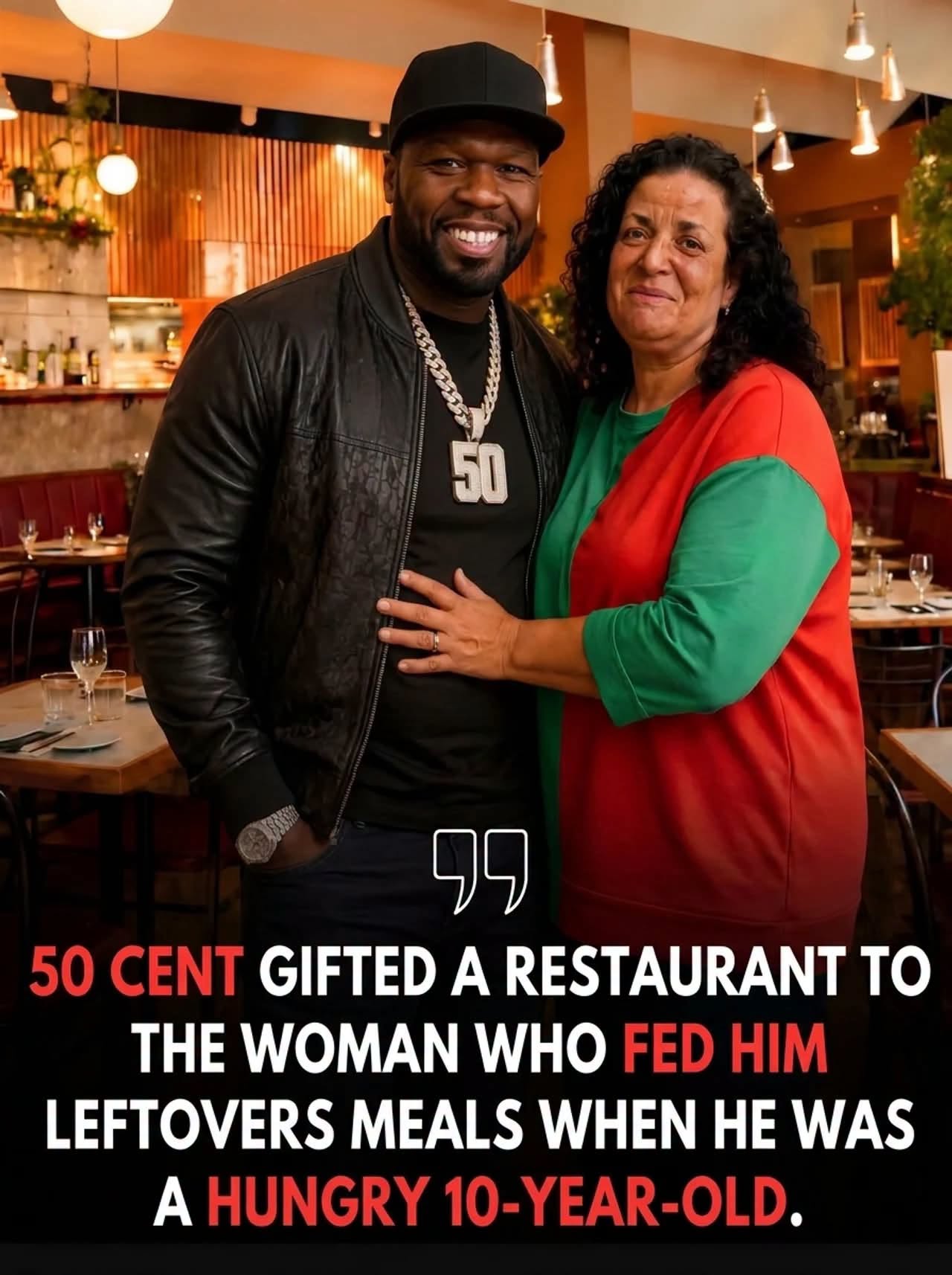
  • 💥 “NEVER FORGET THE BLOCK!” — 50 Cent shocks the entire block by gifting a brand new, fully-funded restaurant to the kind woman who gave her free meals during his strug… See more

    💥 “NEVER FORGET THE BLOCK!” — 50 Cent shocks the entire block by gifting a brand new, fully-funded restaurant to the kind woman who gave her free meals during his strug… See more

    Success stories often capture the public’s imagination, but the most unforgettable ones are those rooted in gratitude. Imagine an entire neighborhood gathering to witness a life-changing surprise as one of hip-hop’s biggest icons returns to honor someone who believed in him long before fame, fortune, and global recognition. That is exactly why the story of 50 Cent allegedly gifting a fully funded restaurant to the woman who fed him during his hardest years has resonated so deeply online.

    Whether viewed as an inspiring tale or a symbolic reminder of the importance of remembering those who helped us, the story highlights timeless values: kindness, loyalty, humility, and giving back.

    A Childhood Filled with Challenges

    Long before becoming a household name, 50 Cent, born Curtis James Jackson III, faced immense hardship growing up. Raised in a challenging neighborhood, he experienced poverty, instability, and countless obstacles that could have easily derailed his future.

    Many successful people speak about the strangers, neighbors, teachers, or community members who quietly supported them when they had very little. Sometimes it was a warm meal. Other times it was encouragement, advice, or simply believing in someone’s potential.

    According to the viral story, one woman became exactly that kind of person in Curtis’s life.

    She reportedly never asked for recognition.

    She never expected repayment.

    She simply made sure a hungry young man had something to eat.

    Years later, that simple act of kindness would return in a way nobody could have imagined.

    Kindness That Was Never Forgotten

    People often assume celebrities forget where they came from.

    The reality is that many successful individuals frequently acknowledge those who helped shape their journey.

    The woman at the center of this story allegedly owned a modest food establishment where neighborhood children and struggling families were always welcomed.

    When young Curtis stopped by without enough money, she reportedly refused to let him leave hungry.

    Instead of asking for payment, she reminded him that everyone deserves a chance.

    Those meals may have lasted only a few minutes, but their impact lasted decades.

    Rising Against the Odds

    Years later, Curtis Jackson transformed his life through determination, music, and entrepreneurship.

    His breakthrough albums sold millions worldwide.

    His business ventures expanded into television, fashion, beverages, and entertainment.

    Despite enormous success, stories have often highlighted his appreciation for loyalty and resilience.

    According to the viral account, while reflecting on his journey, he began thinking about the people who quietly helped him before anyone knew his name.

    One memory stood above the rest.

    The woman who never allowed him to go hungry.

    A Secret Plan Begins

    Rather than sending flowers or writing a thank-you note, the story claims 50 Cent planned something extraordinary.

    Working quietly with architects, contractors, restaurant consultants, and local officials, he allegedly organized a complete surprise.

    Instead of renovating the woman’s aging restaurant, the plan involved creating an entirely new establishment.

    Everything would be covered.

    Construction.

    Kitchen equipment.

    Furniture.

    Licensing.

    Interior design.

    Staff training.

    Operating expenses.

    Marketing.

    Even several months of payroll.

    The goal wasn’t simply to give her a restaurant.

    It was to provide a business capable of thriving for years.

    Keeping the Surprise Hidden

    Keeping such a large project secret wasn’t easy.

    Neighbors reportedly noticed construction activity but assumed another commercial business was moving into the area.

    Even the woman herself allegedly had no idea.

    Friends invited her to attend what she believed was a community appreciation event.

    Little did she know she would become the guest of honor.

    The Big Reveal

    Crowds gathered outside the newly completed building.

    Music filled the air.

    Local families arrived with excitement.

    Community leaders prepared speeches.

    As cameras rolled, 50 Cent stepped onto the stage.

    After thanking everyone for supporting local businesses, he began sharing memories from his childhood.

    He spoke about difficult days.

    Empty pockets.

    Dreams that seemed impossible.

    Most importantly, he remembered the people who showed compassion without expecting anything in return.

    Then he called the woman forward.

    Confused but smiling, she walked onto the stage.

    He thanked her publicly for feeding him during times when she had very little herself.

    The audience fell silent.

    Then came the announcement.

    The restaurant behind them belonged to her.

    Fully paid.

    Fully furnished.

    Completely debt-free.

    For a few moments, she reportedly stood speechless.

    Then tears began rolling down her face.

    An Emotional Community Response

    Witnesses described the atmosphere as unforgettable.

    Many people cried openly.

    Neighbors applauded.

    Children hugged their parents.

    The moment became about much more than a building.

    It represented hope.

    Proof that kindness can travel across decades.

    People often wonder whether small acts matter.

    This story suggested they absolutely do.

    More Than a Restaurant

    According to the account, the gift included much more than property ownership.

    Professional chefs helped design the menu.

    Financial advisors assisted with budgeting.

    Marketing specialists created branding.

    Business consultants developed long-term growth strategies.

    The woman wasn’t simply handed keys.

    She was allegedly given every opportunity to succeed.

    That thoughtful planning made the gesture even more meaningful.

    Creating Jobs

    Beyond helping one individual, the restaurant reportedly created employment opportunities for local residents.

    Young adults received training.

    Experienced cooks found work.

    Servers, cleaners, cashiers, and managers joined the team.

    Local suppliers also benefited through new business partnerships.

    One generous act created opportunities for dozens of families.

    Customers Arrive

    Word spread quickly.

    People traveled from neighboring communities hoping to experience the restaurant.

    Some came for the food.

    Others came because they wanted to support a story built around gratitude.

    Customers shared photos online.

    Positive reviews increased visibility.

    Soon, what began as a neighborhood restaurant attracted visitors from far beyond the city.

    The Power of Gratitude

    Modern society often celebrates wealth.

    Far less attention is given to gratitude.

    Yet gratitude has the power to strengthen relationships, inspire generosity, and encourage communities to care for one another.

    The alleged gift reminds people that success becomes even more meaningful when shared.

    Many entrepreneurs speak about the importance of remembering where they started.

    Returning to uplift those who helped along the way sends a powerful message.

    Social Media Reacts

    The story quickly spread across social media platforms.

    Millions praised the generosity.

    Comments poured in from around the world.

    Many users shared personal stories about neighbors, teachers, grandparents, and restaurant owners who helped them during difficult periods.

    Others reflected on the importance of giving back after achieving success.

    The conversation became larger than the celebrity involved.

    It became a discussion about compassion.

    Why Stories Like This Go Viral

    Whether every detail is independently verified or not, stories centered on gratitude often resonate because they reflect values people admire.

    They remind audiences that kindness has lasting impact.

    Even one meal offered to someone in need can become part of a much bigger story years later.

    These narratives inspire people to look differently at everyday opportunities to help others.

    Lessons Everyone Can Learn

    The popularity of this story offers several meaningful lessons:

    * Never underestimate a simple act of kindness.
    * Help people without expecting repayment.
    * Remember those who supported you before success arrived.
    * Use success to create opportunities for others.
    * Gratitude is one of the greatest forms of generosity.

    These ideas apply whether someone is a celebrity, business owner, student, or neighbor.

    A Legacy Beyond Fame

    Financial success may earn headlines, but generosity often creates lasting memories.

    Buildings eventually age.

    Businesses change ownership.

    Careers evolve.

    However, stories about compassion continue inspiring future generations.

    If the account is accurate, the restaurant represents much more than a business investment.

    It symbolizes appreciation for someone whose kindness helped shape another person’s future.

    Conclusion

    The viral story of 50 Cent surprising the woman who fed him during his difficult years with a brand-new, fully funded restaurant has captured hearts because it reflects universal values that transcend fame and fortune. It serves as a reminder that genuine kindness often leaves an impact far greater than anyone realizes at the time.

    While specific viral stories like this should be approached with caution unless confirmed by reliable sources, the message behind them remains meaningful: never forget the people who stood by you when life was difficult. Success is most rewarding when it creates opportunities for others, and gratitude has the power to transform not only individual lives but entire communities.

    In a world often focused on personal achievement, stories like this encourage us to remember that even the smallest gesture—a warm meal, a helping hand, or a few encouraging words—can become the foundation of someone else’s future success. And perhaps the greatest measure of success is not how much we accumulate, but how generously we give back to those who once helped us move forward.

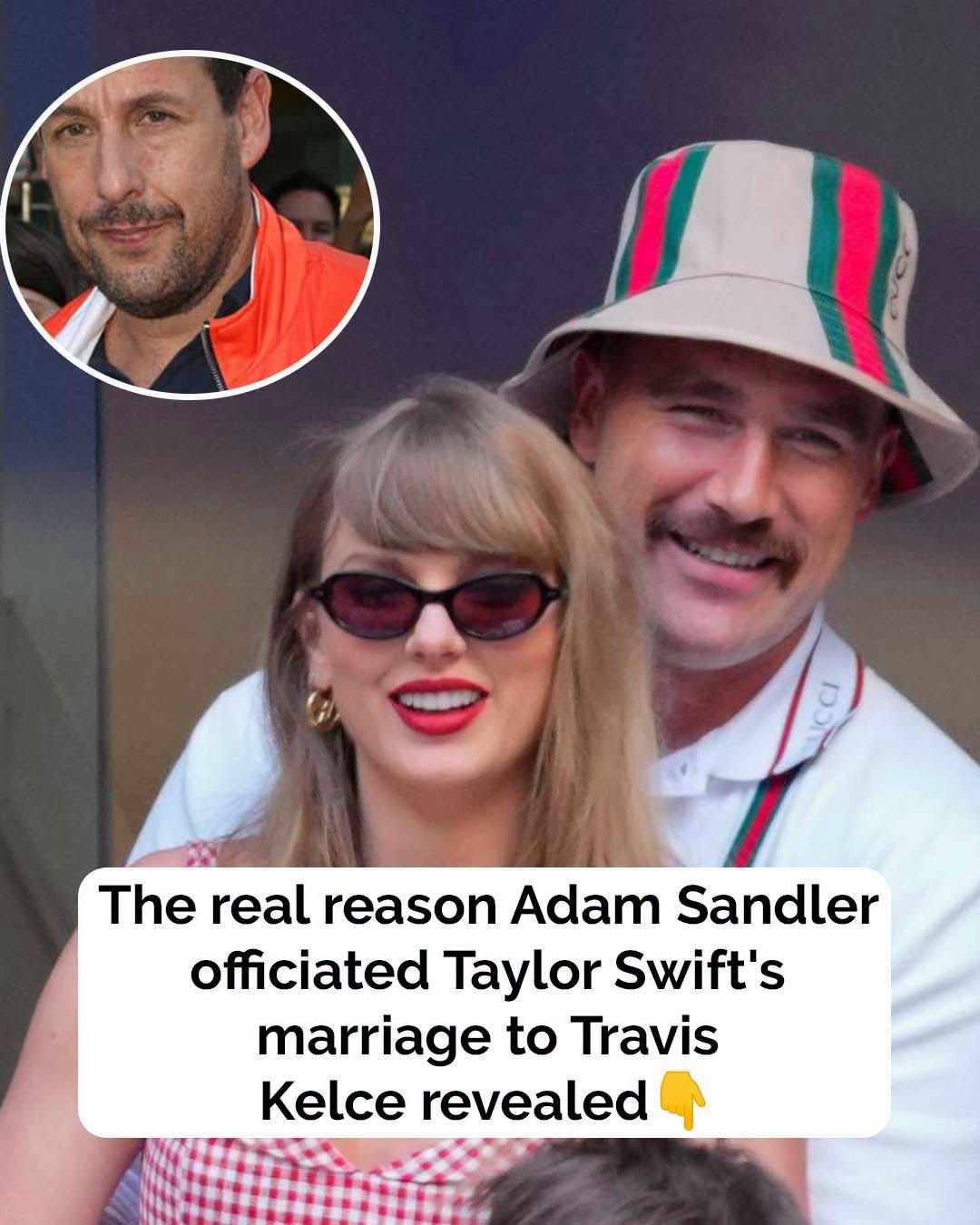
  • Taylor Swift picked comedian Adam Sandler to officiate her wedding and now the real reason why has been revealed and it’s really quite sweet ❤ Check comments

    Taylor Swift picked comedian Adam Sandler to officiate her wedding and now the real reason why has been revealed and it’s really quite sweet ❤ Check comments

    Taylor Swift and Travis Kelce didn’t just get married; they staged a spectacle that felt like a shared fever dream. Madison Square Garden, lit like a tour finale, held roughly 1,000 witnesses as the couple walked toward an altar guarded not by clergy, but by Adam Sandler in a sharply tailored tux. He wasn’t a stunt cameo. He was the emotional hinge of the entire night, the one person who could speak to both their worlds at once.

    Sandler drew from years of fandom and affection, weaving Swift’s lyrics into vows and slipping Kelce’s favorite movie quotes between moments of disarming sincerity. Laughter cracked open the room, then gave way to tears as he described a family—his own—held together by Taylor’s music, and a generation of athletes raised on his films. By the time Austin Swift straightened his tie and Jason Kelce wiped his eyes, it felt less like a celebrity wedding and more like a strange, perfect collision of American myths: pop star, football hero, and the comedian who somehow made it all feel human.

  • 11-year-old Dora Belen Rivera was sitting in a car when a bullet suddenly struck her 😭👇

    11-year-old Dora Belen Rivera was sitting in a car when a bullet suddenly struck her 😭👇

    An 11-year-old girl who was shot in the head while sitting in a car outside a McDonald’s in Florida has spoken publicly for the first time since her surgery. 

    An 11-year-old girl who was shot in the head while sitting in a car outside a McDonald’s in Florida has spoken publicly for the first time since her surgery. 

    Dora Belen Rivera was sitting in a parked car outside the McDonald’s in Hallandale Beach on June 27, waiting for food with her father Oscar Roman Miron and her two younger siblings, aged two and five.

    An 18-year-old McDonald’s employee became involved in an altercation in the parking lot while arriving for his shift and opened fire. Dora was hit in the head. Her father was struck in the leg, while the two younger children were unharmed.

    Dora underwent emergency surgery but doctors determined that removing the bullet would cause greater harm than leaving it in place. She faces a long road of specialized medical care and rehabilitation ahead.

    An 11-year-old girl who was shot in the head while sitting in a car outside a McDonald’s in Florida has spoken publicly for the first time since her surgery. 

    Dora Belen Rivera was sitting in a parked car outside the McDonald’s in Hallandale Beach on June 27, waiting for food with her father Oscar Roman Miron and her two younger siblings, aged two and five.

    An 18-year-old McDonald’s employee became involved in an altercation in the parking lot while arriving for hi

    An 11-year-old girl who was shot in the head while sitting in a car outside a McDonald’s in Florida has spoken publicly for the first time since her surgery. 

    Dora Belen Rivera was sitting in a parked car outside the McDonald’s in Hallandale Beach on June 27, waiting for food with her father Oscar Roman Miron and her two younger siblings, aged two and five.

    An 18-year-old McDonald’s employee became involved in an altercation in the parking lot while arriving for his shift and opened fire. Dora was hit in the head. Her father was struck in the leg, while the two younger children were unharmed.

    Dora underwent emergency surgery but doctors determined that removing the bullet would cause greater harm than leaving it in place. She faces a long road of specialized medical care and rehabilitation ahead.

    First public words were ones of gratitude

    Despite everything she has been through, Dora’s first public words were ones of gratitude.

    “Thank you for everything,” she said.

    “Thank you for the police. Thank you for the firefighters. Thank you for the doctors. It feels like I have another chance.”

    Her father has since been discharged from hospital but the family says they have been left deeply traumatized.

    What happened

    Police say the family were not the intended targets. Surveillance footage obtained by NBC Miami showed a man chasing McDonald’s employee Ralph N-Kosi Blue III through the parking lot before taking cover on the opposite side of the SUV where Dora and her father were sitting.

    Blue is then seen raising his weapon and firing.

    Blue, 18, has been charged with two counts of aggravated battery with a deadly weapon and two counts of aggravated assault with a deadly weapon. The McDonald’s franchise owner confirmed Blue is no longer employed at the restaurant.

    A GoFundMe set up by the family is raising money to cover medical costs, rehabilitation, lost income and daily expenses while Oscar focuses entirely on his daughter’s recovery.

    READ MORE:

  • MY HUSBAND HAD NO IDEA THERE WAS A CAMERA IN THE ROOM — BUT WHEN I SAW WHAT HE DID WHEN HE THOUGHT NO ONE WAS WATCHING, I COULDN’T BREATHE. Lately, something about him … See more

    A young mother grew concerned when her once-loving husband became emotionally distant, spending hours on his phone and rarely engaging with the family.

    Although he remained physically present, their home felt different, and their two-year-old daughter became withdrawn and increasingly clingy.

    Wanting answers rather than conflict, the mother secretly installed a hidden camera in the living room to better understand what was happening when she wasn’t paying close attention.

    The footage showed no dramatic betrayal. Instead, it revealed a father absorbed in his phone while his daughter quietly sought connection.

    As the article explains, “The footage revealed that the emotional distance was real” and was affecting their child through “a silent form of emotional neglect.”

    Shocked by what they saw, the mother shared the recordings with her husband, and the couple decided to seek counseling.

    The experience became a turning point, helping them recognize the impact of emotional disconnection.

    It also highlighted the importance of addressing subtle problems early, proving that awareness and open communication can help families heal before lasting damage occurs.

  • My husband’s mistress came to my door and said, “I’m pregnant with his baby, and we need this house to raise our family” — but what I did next left them both completely… See more

    My husband’s mistress came to my door and said, “I’m pregnant with his baby, and we need this house to raise our family” — but what I did next left them both completely… See more

    The perfume on my husband’s shirt was only the beginning. Then a pregnant stranger knocked on my door and calmly asked me to hand over my home. I let her keep talking for a reason. My husband’s shirt smelled like a woman who wasn’t me. I stood in the laundry room with Tyler’s collar lifted halfway to my face, and the perfume on it was sharp and floral and entirely unfamiliar. I lowered the shirt into the basket, the way you lower something you don’t want to wake. The house was quiet around me. Eighteen years of mornings in that kitchen, the same wooden table where our two kids had once eaten cereal before school. The same hum from the refrigerator. Our kids were in college now, and the quiet had become a presence of its own. Tyler had left before sunrise again. He left earlier and earlier in the morning, later and later at night. “It’s just a busy quarter,” he’d told me the night before, kicking off his shoes without meeting my eyes. “You’ve been saying that for months,” I said gently. “Because it’s been busy for months, Debra. Please.” I’d let it go. I always let it go.

    The phone had rung twice that week with no one on the other end. A credit card statement had shown a charge for a steakhouse downtown I’d never seen the inside of. “Just a work dinner,” Tyler had muttered when I asked. “I forgot to tell you.” “You usually tell me.” “I forgot.” I convinced myself a good wife gave her husband room to breathe. I told myself the perfume belonged to an elevator, a coworker, or a client’s hug. I rinsed my coffee cup, smoothed my blouse, grabbed my purse, and prepared to leave for my dentist appointment. Then three sharp knocks echoed through the house. “Who is it?” I called. No answer. Just another impatient knock. Assuming it was a delivery, I opened the door.

    The woman standing on my porch was a stranger, but she knew my name. “Debra?” she said with a practiced smile. “My name is Rachel. I’m pregnant with your husband’s son.” Every doubt I had ignored for months crashed into that moment. I stood frozen, one hand gripping the doorknob. Rachel smiled as though she had rehearsed this conversation. “I think you heard me,” she said gently. “Tyler and I have been together for almost a year. I know this is hard, but honesty is kinder.” She went on to explain that she and Tyler had discussed the future, including the house. “The baby needs stability,” she said. “You’re alone here now with the kids away at college. Tyler said he’d already told you.”

    That single sentence told me everything. Tyler hadn’t told me, and he hadn’t told her the truth either. He had sent Rachel to a door he promised was already open. I stayed calm. “Can you repeat exactly what you want?” I asked. She blinked, then replied that Tyler would help me find somewhere smaller because the house made more sense for their new family  I simply nodded and asked if she would wait in her car for a few hours while I thought. Believing my politeness meant surrender, she smiled confidently and walked away.

    Meal kit subscriptions

    I closed the door quietly and leaned against it. The hallway looked exactly the same. Wedding photos, our children’s graduation pictures, memories from vacations where I suddenly realized Tyler had seemed emotionally absent. Then my eyes settled on the framed copy of the deed hanging in my office. Years earlier, my father had insisted I frame it. “So you never forget what’s yours, Debby,” he had said. At the time I thought he was simply being sentimental. Now those words carried a very different meaning. I picked up my phone and called my sister Margaret. “Margaret, I need you here. Now.” She paused only long enough to say, “So you finally know.” Twenty minutes later she was on her way.

    Margaret arrived carrying folders filled with documents I had quietly asked her to help me gather months before. We spread everything across the kitchen table: property records, inheritance papers, account statements, and legal documents. “The house was bought outright with Dad’s money,” I reminded her. “And the deed?” she asked. “Only my name.” Margaret adjusted her glasses, smiled, and said, “Debra, sweetheart, they have nothing. Not a thread.” I had barely exhaled in relief when the doorbell rang again. I already knew who it was.

    Rachel had obviously called Tyler the moment she left. They stood together on my porch. Tyler looked nervous while Rachel walked inside as though she already owned the place. Margaret was waiting at the kitchen table. Tyler stumbled through an explanation about thinking of the baby and how staying in the house simply “made sense.” Rachel interrupted to suggest I move into something smaller. I calmly asked her how long she had known Tyler. Her answers became increasingly uncertain. Then I asked when she first learned about my father’s inheritance. She tried to dodge the question, but I pointed out that she knew far too much about the house. Tyler had complained publicly about my inheritance at an office holiday party, and Rachel had clearly been listening.

    I leaned forward and quietly told her, “You didn’t fall in love with my husband. You chose him because of what you thought he had.” Tyler slowly turned toward her, confused. Margaret slid a folder across the table. “Perhaps you can explain this,” she said. Tyler opened it before Rachel could. Margaret explained that a paralegal friend had quietly checked public employment records and civil filings. Rachel had appeared in the lives of two other married executives before Tyler. In both cases, the marriages ended shortly after she arrived. Tyler’s face lost all color as he read every page.

    Marriage

    Rachel insisted everything was being taken out of context, but Tyler asked the only question that mattered. “Are you actually pregnant?” She stayed silent. He asked again. Still nothing. Watching him realize he had been manipulated was strangely quiet. He had believed he was leaving one life for another, only to discover that he may simply have been another target. Rachel stood up, insisting she did not have to stay. Tyler never moved from his chair.

    I placed the documents neatly on the table. “The house is in my name. Margaret is freezing the joint accounts this afternoon, and I’ll begin the divorce process by the end of the week.” Tyler pleaded for another chance to talk. I calmly explained that I wasn’t interested in arguing, shouting, or negotiating. Rachel tried to interrupt, but I stopped her. “You came here expecting to take my home,” I said. “Instead, you lost the man you spent the past year trying to control.”

    Tyler looked at Rachel one final time. “Tell me the inheritance had nothing to do with this. Tell me the baby is real.” Rachel never answered. She looked toward the door as though calculating the quickest escape. The silence filled the kitchen. Finally I spoke. “Both of you need to leave my property.” Tyler asked whether I was really ending eighteen years of marriage. I answered honestly. “You ended it. I’m simply refusing to repair what you chose to break.”

    Rachel left first without another word. Tyler followed much more slowly, finally understanding that the future he imagined no longer existed. I closed the door, turned the lock, and stood there for a moment. For the first time that day, the house felt peaceful instead of heavy. Margaret remained beside me, saying nothing because nothing more needed to be said.

    Over the next three days, practical things replaced emotional ones. The locks were changed. The children were told the truth with kindness and honesty. Legal paperwork moved forward. Every task felt less like an ending and more like putting a life back into order. The fear I had carried for months slowly disappeared with each decision.

    One quiet morning I reached for a single coffee mug instead of two. I poured my coffee, watched the steam rise, and waited for sadness to arrive. It never did. Margaret hummed softly somewhere down the hallway, the same tune she had hummed when we were children. The house felt different now—not because anything had changed physically, but because I no longer carried uncertainty inside it.

    I carried my coffee to the kitchen table where my family had shared countless breakfasts over eighteen years. Instead of sitting in the chair I had always taken, I chose the seat I actually wanted. Looking around the room, I realized the morning Rachel knocked on my door was not the day my life fell apart. It was the day I stopped ignoring the truth, reclaimed what was already mine, and began the next chapter on my own terms.