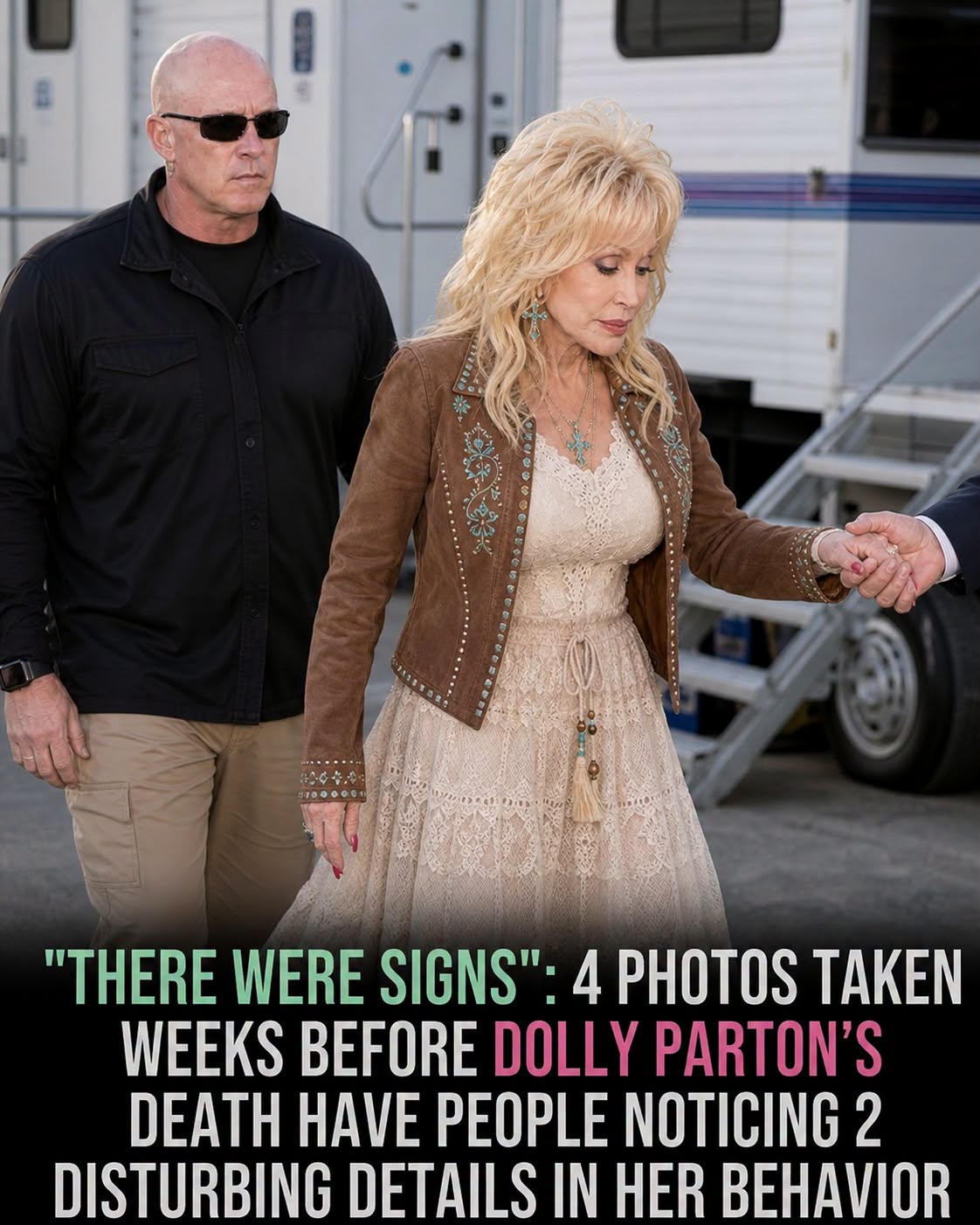
What unfolded that June day now reads like a quiet act of authorship. Dolly Parton was not staging a denial of age or illness; she was staging a promise. By standing in East Tennessee, in the mountains that shaped her, she reaffirmed that her life’s work belonged to the people and places that first believed in her. The travel stop, like Dollywood and the Imagination Library, extended her conviction that memory could be turned into opportunity.\
Her careful movements and shortened appearance did not diminish the moment; they deepened it. She allowed help without surrendering identity, accepting an arm while insisting on rhinestones. The team who hovered discreetly at her side helped protect the illusion she wanted to give the crowd: not that everything was fine, but that the day was for them. In doing so, they preserved a final public image defined less by decline than by generosity, professionalism and deliberate grace.
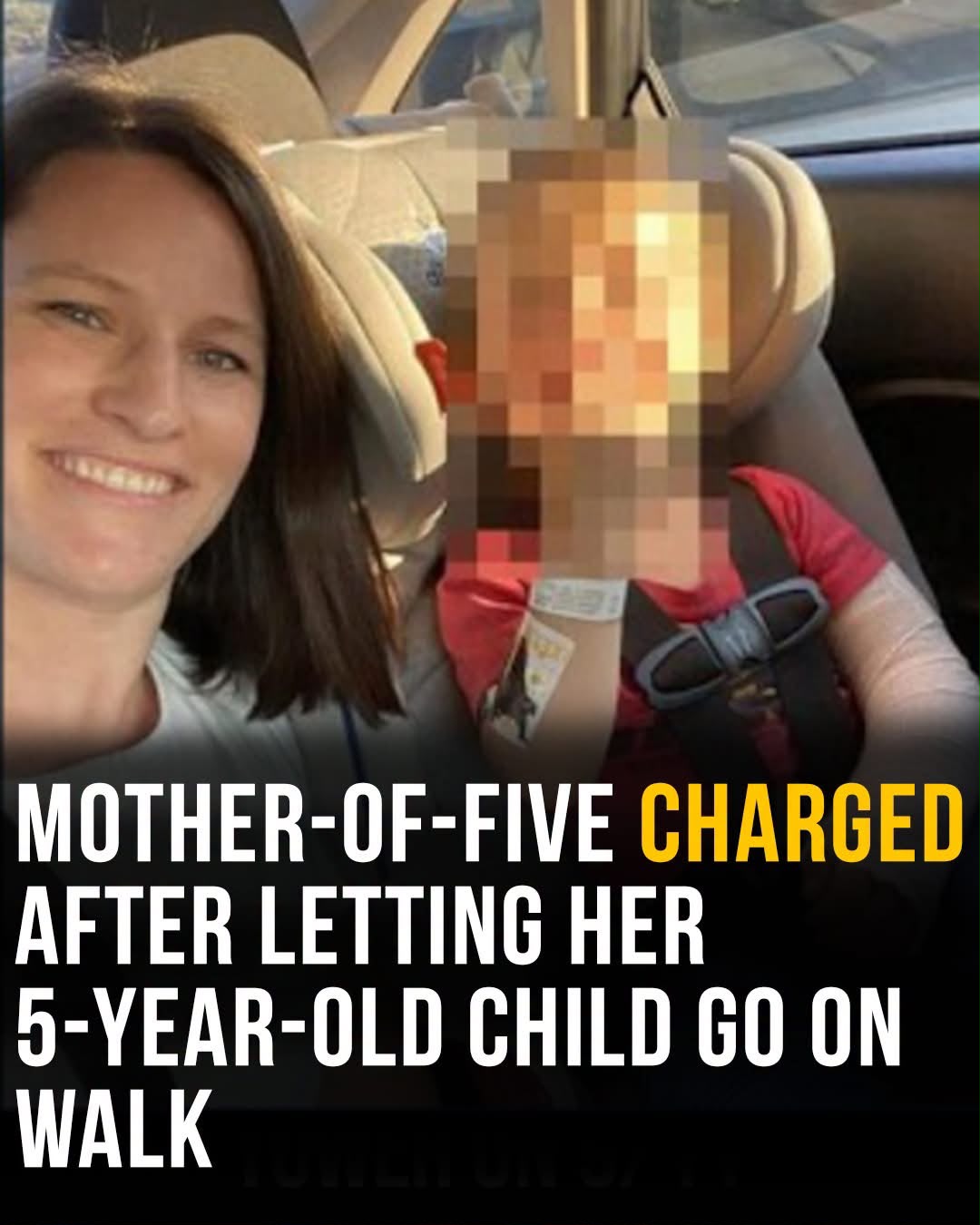
A Virginia mother has been convicted after she let her 5-year-old son walk alone around their gated community.
When Karyann Parkinson, 36, and her 5-year-old son Sam went for a walk in their gated community in Williamsburg, Virginia they probably would never have guessed the storm that was looming in the near future. the two passed ponds and crossed the street several times, with Sam riding his bike ahead of her and back again along the way.
Once they got home, Sam wanted to head back out to explore more.
Parkinson, who was eight months pregnant at the time, allowed him to go alone, because she deemed it a reasonable, age-appropriate risk. She and her husband want their children to build confidence exploring their surroundings within safe limits.
What happened during the walk
About 20 to 30 minutes later, Sam was brought home – visibly shaken – by a security guard. A neighbor had spotted the boy outside alone and called for help.
Parkinson maintained that Sam had the right to walk around the neighborhood by himself and that he was safe the whole time. The security guard disagreed and told her she’d broken the law.
Next he called the police, and two weeks later, officers returned to the family’s home with an arrest warrant.
The conviction and its aftermath
Parkinson was convicted of contributing to the delinquency of a minor and received a sentence of six months of suspended jail time.
She was offered a withheld finding, an option that would have avoided a formal conviction. She turned it down.
“That would have been saying that what I had done was a crime, and that would’ve violated my principles and my convictions as a parent,” she explained.
“And I think it also would have let down other parents who need to know that normal childhood experiences are not a crime.”
She and Sam were also placed on Virginia’s Abuse and Neglect Registry for seven years following a substantiated finding against her. She’s currently appealing the conviction.
People have strong opinions about the case
The case has understandably caused widespread debate, like matters concerning parenting often do.
Some people argue that letting a 5-year-old walk to a pond alone is genuinely risky, and others say the response from authorities went far beyond what the situation called for.
Parkinson herself has described the experience as devastating and she’s feared he children will be taken away from her.
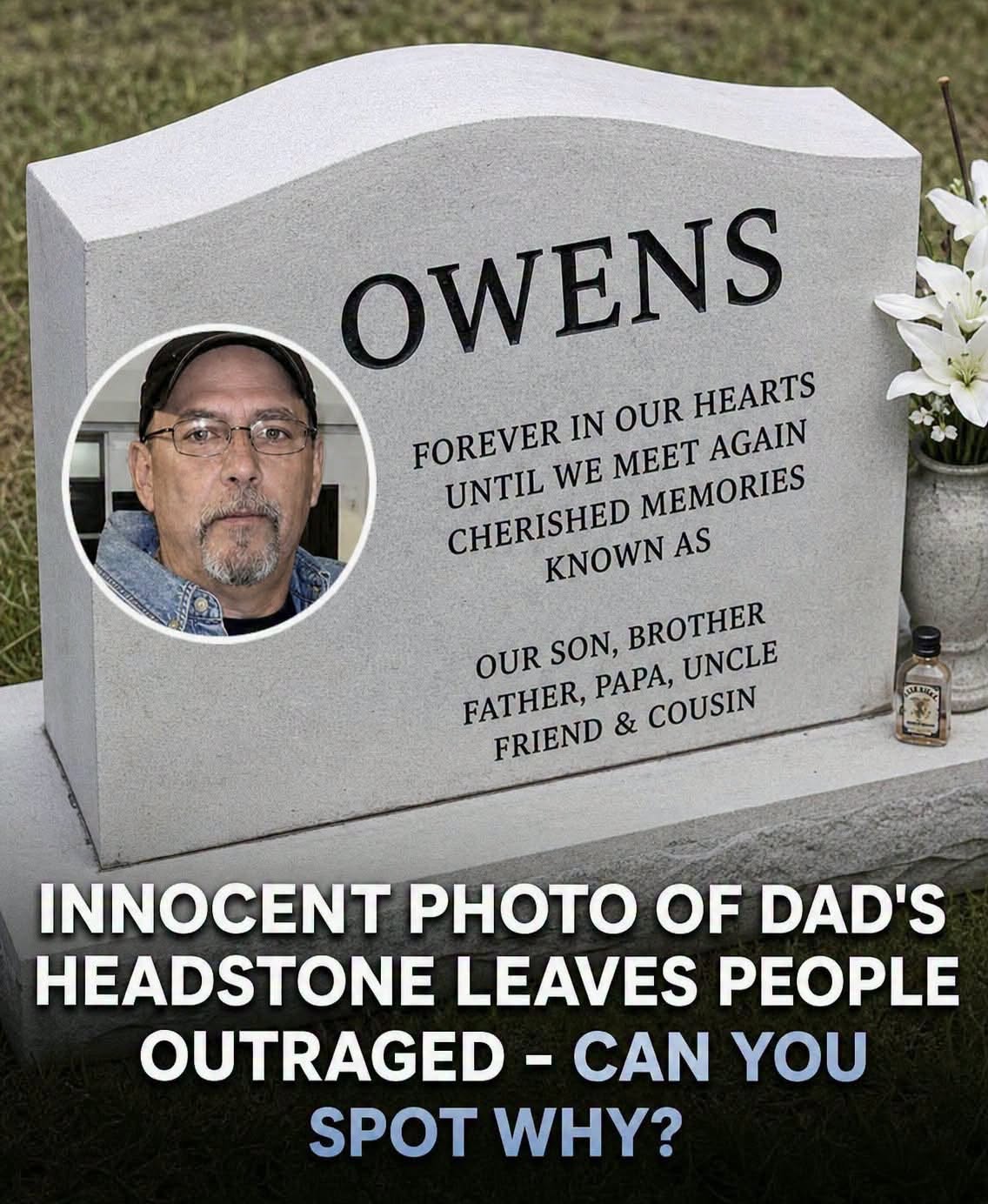
A gravestone is usually created as a quiet tribute to someone who has passed away. It is meant to preserve a name, a memory, and perhaps a few words that capture the person’s life. But one unusual memorial became the center of an unexpected disagreement after people discovered that its wording contained a hidden message
At first glance, the gravestone appeared completely ordinary. The inscription seemed respectful and carefully arranged. However, when the individual words were examined more closely, readers noticed that the first letters formed a second message. What appeared to be a traditional memorial had quietly preserved a private joke known only to the family
The discovery quickly created a difficult question. Should a family memorial be allowed to reflect the personality and sense of humor of the person being remembered, even when the message may not fit the traditional expectations of a cemetery?
For the family, the answer seemed simple. They knew the person behind the name on the stone. They remembered his personality, his sense of humor, and the private moments that had made him special to them. The hidden message was not intended to offend visitors or make a public statement. It was simply a small reminder of the person they had known during his lifetime
In their view, the unusual detail made the memorial more personal rather than less respectful. Instead of presenting a completely formal image, the inscription preserved something genuine about the individual. It reminded the family that a person’s identity consists of more than official dates and carefully chosen words.
The cemetery, however, had another perspective. Memorial grounds are shared spaces where many families come to remember people they have lost. Cemetery guidelines often exist to maintain a consistent appearance and a peaceful atmosphere for everyone. From that perspective, allowing unusual inscriptions can raise questions about where reasonable boundaries should be placed.
That difference in perspective turned a small family decision into a much broader discussion about memorials and remembrance.
Some people felt that families should have considerable freedom when choosing how to honor their loved ones. They argued that a gravestone is ultimately a personal tribute and that individuality should have a place in memorial design.
Others believed that shared spaces require certain standards. A cemetery is not only a collection of individual memorials but also a place visited by many people with different backgrounds, expectations, and ideas about appropriate remembrance.
Both viewpoints contain an understandable concern. The family wanted to preserve something meaningful about a loved one, while cemetery officials wanted to maintain the character of a shared environment.
The story also highlights an interesting aspect of grief. When someone dies, families often choose photographs, stories, belongings, and phrases that represent the person they remember. Sometimes those memories are formal and sentimental. Other times, they are funny, unusual, or deeply personal.
A memorial does not always have to tell an entire life story. Sometimes a small detail can mean more to a family than a long inscription ever could.
That is likely why the hidden message became so important. To strangers, it was simply an unusual detail carved into stone. To the family, it represented a private connection that remained long after the person was gone.
The disagreement ultimately raises a larger question about remembrance: Should a memorial reflect the expectations of the wider community, or should it primarily reflect the personality of the person being remembered?
There may never be one universal answer. Every cemetery has its own guidelines, and every family has its own way of dealing with loss.
What makes this story memorable is not simply the hidden message itself. It is the reminder that people leave behind more than names and dates. They leave behind personalities, traditions, inside jokes, stories, and memories that can continue to bring a smile to those who knew them.
Sometimes, the smallest detail on a gravestone can tell the biggest story.
The montage of memories, set to Lenny Kravitz’s “Happy Birthday,” captured more than a father’s love; it revealed the quiet transformation of a girl the world once treated as a headline. In each frame, Dannielynn Birkhead looked less like a symbol of scandal and more like what she has always been to Larry: his only child, his responsibility, his redemption. Fans saw the resemblance to Anna Nicole, but they also saw the steady hand that kept Hollywood at arm’s length while she grew up.
Now, at 20, Dannielynn walks into the Barnstable Brown Gala in “goth rock” confidence, studies forensic science, dreams about baking, and speaks openly about wanting to be known for herself. The chaos of courtrooms and custody battles has faded into a quieter legacy: a young woman allowed to choose her own life, and a father who never stopped guarding that choice.
Born: February 1, 1937, in New Orleans, Louisiana.
Education: Studied music at Dillard University, later trained at Juilliard.
Morris began his career in music before transitioning to acting, performing in Broadway productions such as Hallelujah, Baby! and Ain’t Supposed to Die a Natural Death.
🎭 Breaking Barriers on Saturday Night Live
In 1975, Garrett Morris joined the original cast of SNL, becoming the first Black cast member.
Known for sketches like “News for the Hard of Hearing,” he brought sharp wit and musical talent to the show.
His presence helped pave the way for future Black comedians in mainstream comedy.
📺 Television Success
The Jeffersons (1970s): Played Jimmy, adding humor to one of TV’s most iconic sitcoms.
The Jamie Foxx Show (1996–2001): As Uncle Junior, Morris became a fan favorite for his comedic timing and warmth.
2 Broke Girls (2011–2017): Portrayed Earl, the cashier with a jazz musician’s soul, bringing his musical background full circle.
🎶 Stage and Music Contributions
Morris’s Broadway credits include Showboat and Operation Sidewinder.
His musical training allowed him to blend comedy with performance, making him a versatile entertainer.
🌹 Aging Gracefully
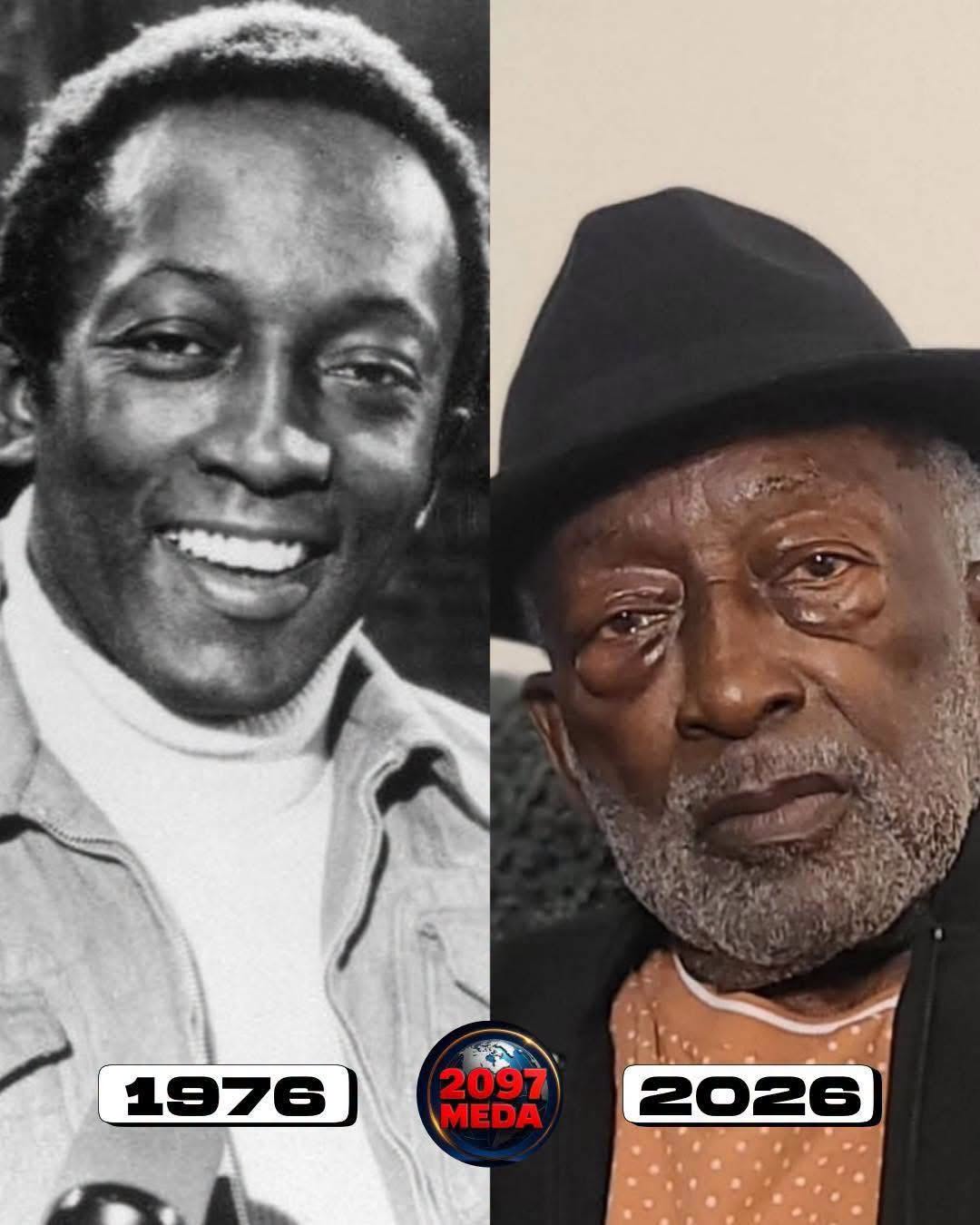
At 89 years old, Morris continues to make appearances, including interviews and stage events.
His longevity in the industry is a testament to his resilience, talent, and ability to adapt across decades.
Fans and peers alike celebrate him as a pioneer who deserves recognition and “his flowers” for breaking barriers and entertaining millions.
🏆 Legacy
Trailblazer: First Black cast member on SNL.
Versatility: Success in comedy, drama, music, and theater.
Mentorship: Inspired younger comedians like Jamie Foxx and countless others.
Cultural Impact: Helped redefine representation in American comedy and television.
🌸 Why He Deserves His Flowers
Morris’s career spans over 60 years, marked by groundbreaking roles and consistent excellence.
His humor remains timeless, and his influence is visible in today’s diverse comedy landscape.
At 89, he embodies grace, resilience, and artistry — a living reminder of comedy’s power to unite and uplift.
— A Surprise mother is recovering after fighting off a coyote that began attacking her 4-year-old daughter over the weekend, leaving the woman with lacerations and puncture wounds on her face.
Arizona Game and Fish Officials said it is the first recorded coyote attack on a person in the Valley since December 2023.
How the attack unfolded
Brittany Cardinal said the attack happened during what started as a Sunday afternoon of kite flying in her Surprise neighborhood.
“We had gone outside because it was windy. And my daughter’s like, ‘oh, let’s fly a kite,’” Cardinal said.
Cardinal said she heard her daughter scream and turned around to see a coyote nipping at her.
“I picked her up and then I started yelling at it, thinking, of course it’s going to go away, and then it didn’t,” Cardinal said.
When the coyote did not back down, Cardinal said she did not either.
“So then I took off my flip-flop, and I was trying to scare it with that by like trying to hit it,” Cardinal said.
During the struggle, Cardinal fell, and the coyote lunged, clamping down on her face.
“I always hear people say like, ‘you don’t feel the pain when like trauma like that happens,’ and I mean, I really didn’t feel any pain. I just felt like the pressure of it,” Cardinal said.
Cardinal and her daughter eventually managed to back away from the coyote and ran home for help.
Wildlife officials respond
Alex Flickinger, public affairs community liaison for Arizona Game and Fish, said the reason for the attack is unclear.
“It’s really not clear as to why the coyote decided to do this,” Flickinger said.
She said officers have removed several coyotes from the area and are testing them for rabies.
Safety precautions
Flickinger said Cardinal responded the way people are supposed to when a coyote attacks.
“You fight back, you yell at the animal, be loud with it, throw rocks, whatever you have to do to get that animal to just run off,” Flickinger said.
Cardinal said she did not weigh her options before acting.
“There was no hesitation at all. I don’t even think I thought about anything. I think you just, like as a mom, you just try to protect your kid,” Cardinal said.
She said she will now carry pepper spray with her at all times.
Arizona Game and Fish said human-coyote encounters increase as temperatures cool off.
The agency advises keeping pet food, trash and anything that smells like food put away, and making a coyote that wanders into a yard feel uncomfortable by yelling or clapping so it does not return.
Inside the overturned ambulance, nurses shielded the newborn with their own bodies as glass rained down and metal twisted around them. The baby’s fragile cries, astonishingly, meant life — a sound that pushed paramedics and bystanders to claw through the wreckage faster. Strangers formed a human chain along the highway shoulder, passing equipment, holding flashlights, and offering shivering survivors their coats in the cold glare of emergency lights.
At the hospital, the infant and two nurses were stabilized, while others fought through pain, shock, and the terror of knowing how narrowly they had all escaped death. Investigators now sift through black box data and dashcam footage, searching for answers in seconds of speed, rain, and human reaction. Yet for the community, one truth is already clear: those who rush to save lives walk the same thin line between rescue and tragedy as the people they serve.
The congregation at Solid Rock Church in Myrtle Beach, S.C., was often reminded by their dynamic pastor, John-Paul “JP” Miller, to resist temptation—and to keep their sex lives active. “Do not refuse sex to each other,” JP, 47, urged in one sermon. “Then Satan won’t be able to tempt you because of your lack of self-control.”
Bruna Pabon, a former church member and a good friend of the pastor’s wife, Mica Miller, 30, was convinced he was speaking most of all to his own spouse. “It was sexual and mental abuse he was putting Mica through,” alleges Pabon, 34. “He wouldn’t let her sleep. He would splash water on her face and pull off the covers. She couldn’t take a trip because he couldn’t go two days without getting physical. He was basically using her for sex. That was the whole marriage.”
JP’s attorney Russell Long did not immediately respond to PEOPLE’s inquiry regarding Pabon’s allegations.
In the hit Netflix docuseries Death of the Pastor’s Wife, former followers claim JP harassed Mica for sex, demanded obedience in their marriage and even forced her to be admitted to a mental hospital when she refused to comply—an alleged yearslong campaign of fear and intimidation seen in text messages and Ring camera footage.
John-Paul Miller and Mica Miller in an undated selfie.
At one point, after Mica moved out and was living with friends or at secret locations, JP appealed to the congregation for help: “I need you to pray that [Mica] will hit rock bottom so that she can come to her senses. Sometimes people need to lose everything. Y’all know that she’s mentally ill, and the stuff that she’s doing is not her. She’s in and out of psychosis.”
Mica, who grew up in Wichita, Kan., before moving with her family to Myrtle Beach, met JP when she joined the church where he was a worship leader. She was 13; he was 28. Mica was 21 and married to someone else when JP, who was also married, announced to the congregation in 2015 that the couple were romantically involved. After getting divorces, they married in 2017.
Solid Rock Church in Myrtle Beach, S.C.NETFLIX
Pabon says Mica initially strove to be an obedient wife—until a growing sense of self-respect and independence put her on a collision course with her outspoken pastor-husband.
Finally, on April 27, 2024— two days after she filed for a divorce—Mica, who was seen on security video buying a gun that day, was found dead from what authorities determined was a self-inflicted gunshot wound at a state park in North Carolina.
For more on Mica Miller or pick up this week’s issue, on newsstands Friday.
Mica with her siblings. From left: Destinee Barrientos, Nate Francis, Mica, Sierra Francis, Anna Francis and Abigail Francis.NETFLIX
Although the death was ruled a suicide—and JP was some 140 miles away in Charleston, S.C.—former members of his flock believe he was somehow to blame.
Says Kenn Young, 50: “Even if she did unalive herself and JP forced her into that [place] where she just couldn’t handle it, it’s still his fault.”
John-Paul Miller in Netflix’s “Death of the Pastor’s Wife.”.NETFLIX
Although JP has never been charged with involvement in his wife’s death, on Dec. 17, 2025, he was indicted on federal cyberstalking and false statement charges for allegedly interfering with Mica’s finances, damaging her tires, placing tracking devices on her car and posting a nude photo of her. He has pleaded not guilty.
Mica Miller and John-Paul Miller on their wedding day in 2017.Netflix
Want to keep up with the latest crime coverage? Sign for breaking crime news, ongoing trial coverage and details of intriguing unsolved cases.
“Our client refutes any report that suggests he ever abused his wife,” Long, JP’s attorney, said in a statement in 2024.
In Myrtle Beach, Mica’s loved ones continue to push for “Mica’s Law,” a proposed South Carolina measure that would make coercive control by a spouse a criminal offense and expand the state’s definition of domestic violence. “The police weren’t able to do a single thing for Mica,” says her sister Anna Francis, 29, in the doc. “That’s why ‘Mica’s Law’ is so important to us as a family.”
At first glance, the image feels like a trick question with only two possible answers: tender human drama or ancient beast. That forced choice is exactly why so many people stare at it for minutes without ever seeing what’s right in front of them. The snow-covered “mountain” is actually fur, the ridge a curved back, the dark patch on the left a buried snout with a quiet eye and floppy ears dusted in white. Once you trace the front paws draped over the ridge and follow the long body stretching to the right, the illusion collapses in an instant.
The dinosaur vanishes, the hugging figures dissolve, and a gigantic sleeping dog suddenly seems impossible to unsee. Like many visual illusions, it exposes how quickly our minds cling to the first story we’re offered, even when the truth is lying peacefully in plain sight.
In the world of construction and electrical work, precision is everything. A recessed outlet may seem like a small detail, but when installed incorrectly, it becomes a glaring reminder of carelessness. Recently, I encountered one such installation in a business I frequent, and the sight of it has been gnawing at me ever since. The technician responsible refused to admit fault, insisting that the outlet was “meant to be” this way. The business owners, trusting the professional, accepted his explanation. But anyone with even a modest understanding of recessed outlets knows this wasn’t right.
The Anatomy of a Proper Recessed Outlet
A recessed outlet is designed to sit neatly within the wall, hiding the drywall cut and providing a flush, clean finish. The process is straightforward:
Backers: Wooden supports placed perpendicularly between vertical studs. These provide stability and weight-bearing capacity.
Studs: The vertical framing members that form the skeleton of the wall.
Cutout: A precise opening made in the drywall, typically traced from the recessed box itself—not the cover plate.
Securing: Once the backers are installed, the recessed box is mounted securely, ensuring it can hold the outlet and any connected devices without wobbling or gaps.
When done correctly, the outlet blends seamlessly into the wall, both functional and aesthetically pleasing.
Where It Went Wrong
My theory is simple: the technician had never installed one of these before. Instead of tracing the recessed box, they traced the cover plate. That mistake led to a hole that was too large. Faced with the error, they likely realized fixing it would require extra effort—replacing drywall, repositioning backers, and re-cutting the opening. Rather than correcting the mistake, they chose the path of least resistance: leave it as is and hope no one notices.
But people do notice. Every time I walk into that business, my eyes are drawn to the botched outlet. It’s not just an eyesore; it’s a symbol of indifference. The technician’s refusal to admit fault only compounds the frustration. Honesty and accountability are cornerstones of good craftsmanship, and both were absent here.
Why This Matters
Some might argue that a recessed outlet is a minor detail, not worth the fuss. But small details add up. In professional spaces, aesthetics matter. A poorly installed outlet undermines the overall impression of quality. More importantly, improper installation can compromise safety. Loose fittings, exposed gaps, or unstable backers can lead to electrical hazards over time.
This isn’t just about drywall and studs—it’s about professionalism. When technicians cut corners, they erode trust. Businesses rely on tradespeople to deliver work that is both functional and durable. Customers, in turn, expect environments that reflect care and attention to detail. A sloppy outlet betrays both.
Taking Matters Into My Own Hands
Rather than waste time arguing, I plan to correct the problem myself. The fix is straightforward:
Remove the existing outlet and cover plate.
Cut a properly sized opening using the recessed box as the template.
Install new backers securely between the studs.
Mount the recessed box flush with the wall.
Reattach the outlet and cover plate, ensuring a clean finish.
It’s a simple job, but one that requires patience and precision—qualities the original technician neglected. By doing it right, I’ll not only restore functionality but also restore dignity to the space.
The Larger Lesson
This experience highlights a broader issue in skilled trades: the temptation to rush. Whether due to deadlines, lack of experience, or sheer indifference, shortcuts are taken. But shortcuts rarely save time in the long run. They create problems that someone else must fix, often at greater expense and frustration.
Craftsmanship is about pride in one’s work. It’s about leaving behind something that speaks to skill, care, and integrity. A recessed outlet may be small, but it’s a test of those values. And when those values are absent, the flaws become impossible to ignore.
Conclusion
Every time I see that recessed outlet, I’m reminded of the technician’s failure—not just in execution, but in honesty. Refusing to admit mistakes is worse than making them. Mistakes can be fixed; denial cannot. By correcting the outlet myself, I’ll reclaim a small victory against indifference. And maybe, just maybe, I’ll inspire others to demand better from the professionals they trust.
Because in the end, it’s not just about outlets. It’s about respect—for the craft, for the space, and for the people who live and work within it.