The Tuesday morning meeting had barely begun when my phone vibrated with a call from my mother. I almost ignored it, assuming it could wait until lunch, but something made me step into the hallway to answer.
Her voice was unusually calm.
“We had to leave Abigail behind,” she said matter-of-factly. “She wasn’t feeling well in the car, and we couldn’t risk missing our flight. I sent you the location.”
Before I could process what she had said, the call ended.
For several seconds I simply stared at my phone, convinced I had misunderstood.
Then I saw the location pin.
My heart sank.
I left the office immediately, explaining only that there was a family emergency. The drive felt endless, even though it took less than half an hour. Every red light seemed to last forever.
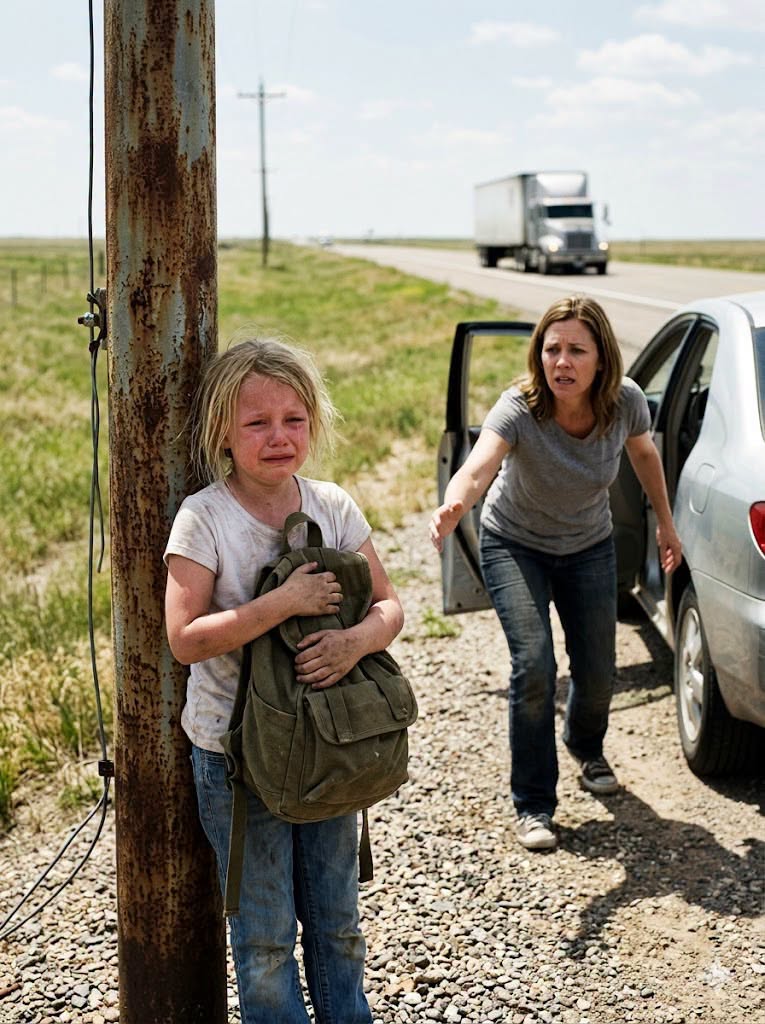
When I reached the roadside market marked on the map, I spotted my eight-year-old daughter sitting on a bench outside a small convenience store. Her backpack rested beside her, and she looked around nervously whenever a car passed.
The store owner had given her a bottle of water and stayed nearby, making sure she wasn’t alone.
The moment Abigail saw my car, she stood up and ran toward me.
I wrapped my arms around her as tightly as I could.
“I’m here,” I whispered. “You’re safe.”
She nodded without saying much, burying her face against my shoulder.
During the drive home, she quietly explained what had happened.
She had become carsick during the drive to the airport. My parents had stopped so she could get some fresh air, but instead of waiting with her or changing their plans, they told her I would come soon and drove away.
She had believed them.
Still, she admitted she had started wondering if they were coming back.
That sentence stayed with me long after we reached home.
I settled her onto the couch with a blanket, made her some warm soup, and let her watch her favorite movie while she rested.
Only after she had fallen asleep did I truly think about everything.
The incident hadn’t appeared out of nowhere.
Looking back, I realized I had spent years overlooking behavior that should have concerned me much earlier.
My parents often expected others to adjust to their schedules, preferences, and convenience. Whenever something became difficult, they preferred someone else solve the problem.
I had always excused it.
“They’re just stressed.”
“They didn’t mean it.”
“They’ll do better next time.”
Those explanations had become habits.
Over the years, I had also quietly supported them financially.
I helped with unexpected home expenses.
I contributed to vacations.
I covered repairs when they couldn’t.
I even maintained a monthly transfer into an account meant for emergencies because I believed helping family was simply what you did.
I convinced myself that keeping everyone together was worth the effort.
Now I wasn’t so sure.
The following morning, after making sure Abigail felt much better, I sat down in my home office with a notebook and every financial document I could find.
I wasn’t acting out of anger.
I simply understood that healthy relationships require accountability.
One by one, I reviewed every shared financial commitment.
I canceled the monthly transfer.
I contacted the travel company regarding the vacation expenses I had covered on behalf of my parents and requested reimbursement for the portion connected to Abigail’s reservation.
I spoke with my bank about removing myself from agreements where my financial support was no longer appropriate.
Everything was handled professionally and respectfully.
There were no dramatic arguments.
Just clear decisions.
Later that afternoon, my parents finally called.
Instead of asking how Abigail was feeling, they focused on how inconvenient the situation had become for them.
They explained how much the delay had disrupted their plans.
They insisted they hadn’t intended to upset anyone.
I asked one simple question.
“Did either of you think about how frightened she might have been?”
There was a long silence.
Eventually the conversation shifted back to missed flights, reservations, and travel costs.
That told me everything I needed to know.
A few days later, another family member reached out privately.
She had been uncomfortable with what had happened and wanted me to know that this wasn’t a spur-of-the-moment decision.
According to conversations she had witnessed before the trip, my mother had repeatedly expressed concern that traveling with a young child would make the vacation less enjoyable.
She had hoped someone else would end up caring for Abigail instead.
Hearing that was painful.
Not because it changed what had happened.
Because it confirmed that my daughter’s feelings had never been considered.
When other relatives began asking questions, I answered honestly.
I didn’t exaggerate.
I didn’t insult anyone.
I simply described the events as they had occurred.
People formed their own opinions.
Several relatives reached out to apologize for not recognizing the pattern sooner.
Others offered support for Abigail, sending thoughtful cards and kind messages that reminded her many people cared deeply about her.
Over the following months, my parents had to make adjustments without relying on my financial assistance.
They reorganized their budget and made different choices about their expenses.
That was their responsibility.
For the first time in years, I stopped trying to solve problems that weren’t mine.
Instead, I focused on the family living under my own roof.
Abigail slowly became herself again.
At first she asked quiet questions that broke my heart.
“Did I ruin everyone’s vacation?”
“Was I difficult?”
“Are Grandma and Grandpa mad at me?”
Each time, I gave her the same answer.
“You did absolutely nothing wrong.”
“You were sick.”
“Adults are responsible for taking care of children—not the other way around.”
Those conversations mattered more than I realized.
Little by little, her confidence returned.
She laughed more often.
She invited friends over again.
She stopped blaming herself for something that had never been her fault.
Six months later, my husband, Mark, and I planned a simple beach vacation.
There was no complicated itinerary.
No pressure to rush from one place to another.
We spent our mornings building sandcastles, collecting shells, and watching the waves.
One evening, as the sun disappeared beyond the horizon, Abigail slipped her hand into mine.
“I’m really happy,” she said.
“So am I.”
In that moment, I realized something important.
Family isn’t measured by shared last names or holiday photographs.
It’s measured by the people who make you feel safe, valued, and loved—especially when life becomes difficult.
That experience changed many things in our lives, but it also strengthened what mattered most.
Our home became calmer.
Our relationships became healthier.
And my daughter grew up knowing that the people who truly love her will always choose compassion over convenience.
That lesson was worth far more than any vacation could ever be.