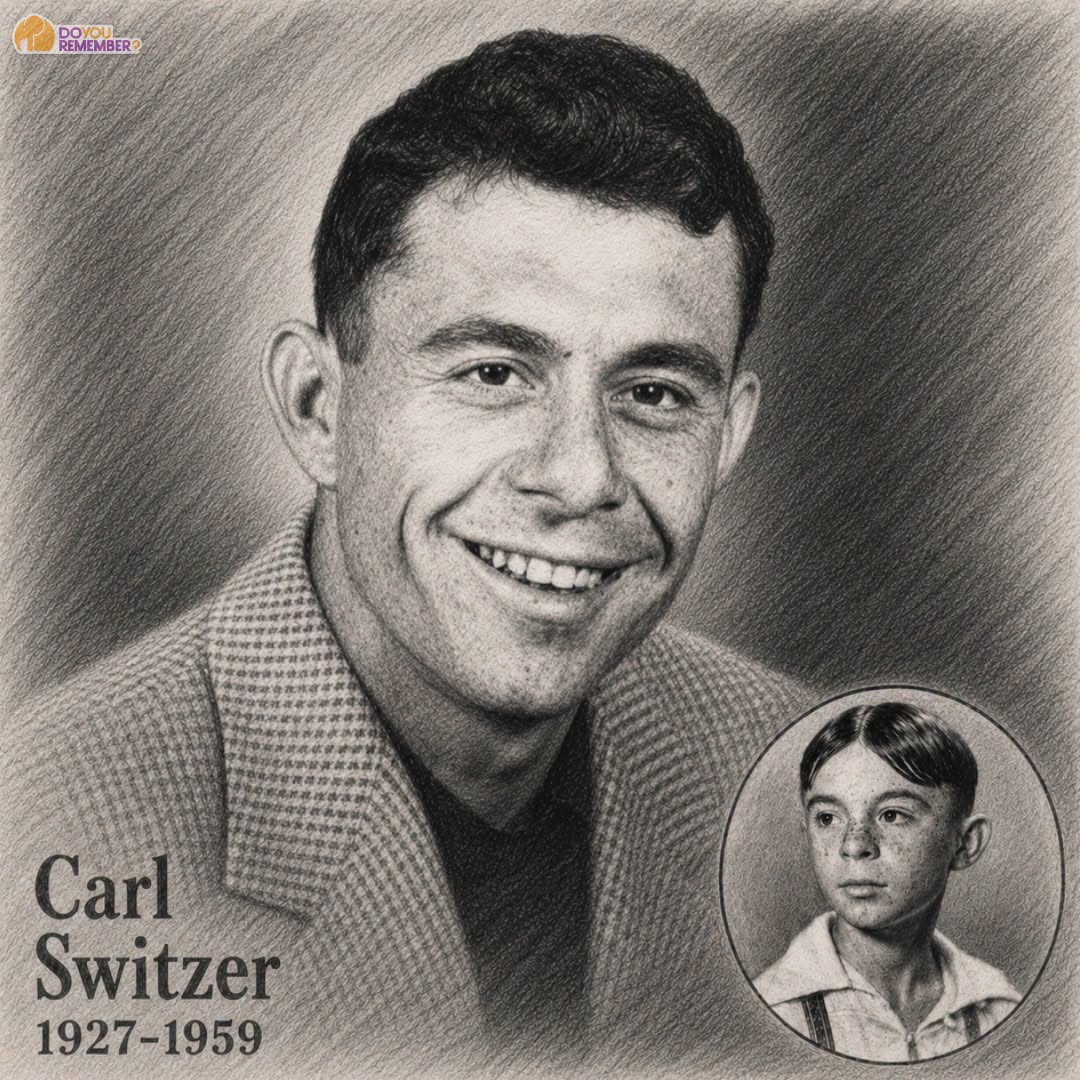
Carl Dean Switzer, remembered by millions as the unforgettable “Alfalfa” from the classic Our Gang (later known as The Little Rascals) comedy series, remains one of Hollywood’s most recognizable child stars. With his trademark cowlick, freckled face, oversized suits, and squeaky singing voice, Switzer created a character that has entertained audiences for generations. Although his career began with extraordinary success, his adult life was marked by financial struggles, typecasting, and personal challenges before ending in a tragic shooting at the age of just 31. His story is both inspiring and heartbreaking—a reminder of the pressures faced by many child actors.
Early Life
Carl Dean Switzer was born on August 7, 1927, in Paris, Illinois, to George Frederick and Gladys Switzer. Growing up on a farm, Carl and his older brother Harold displayed remarkable musical talent from an early age. They frequently entertained audiences at local fairs, auctions, and community events by singing and playing musical instruments.
In 1934, the Switzer family traveled to California to visit relatives. During a tour of Hal Roach Studios, Carl and Harold began performing in the studio cafeteria. Their impromptu performance caught the attention of producer Hal Roach, who immediately recognized their natural talent. Both boys were offered contracts, launching Carl’s Hollywood career almost overnight. (Wikipedia)
Becoming “Alfalfa”
Carl first appeared in the Our Gang comedy series in 1935. Initially a supporting player, he quickly became the breakout star of the series. Studio executives gave him the nickname “Alfalfa,” inspired by his wild cowlick hairstyle.
The Alfalfa character was unlike any other child performer of the era. His confident personality contrasted hilariously with his off-key singing. Whether attempting romantic serenades for Darla or competing with neighborhood rival Butch, Alfalfa’s awkward confidence became his trademark.
One of the funniest aspects of the character was his dramatic singing. Carl intentionally sang slightly off-key for comic effect, creating some of the most memorable moments in the series. Ironically, he was actually a capable singer in real life.
By 1937, Alfalfa had become more popular than the series’ original lead, Spanky McFarland. Children across America copied his hairstyle, catchphrases, and mannerisms, making him one of the biggest child stars of the decade. (Wikipedia)
Why Audiences Loved Alfalfa
Several qualities made Carl Switzer unforgettable:
* His distinctive cowlick hairstyle.
* His squeaky attempts at romantic songs.
* Excellent comic timing.
* Genuine chemistry with fellow child actors.
* A lovable mix of confidence and clumsiness.
The romance between Alfalfa and Darla became one of Hollywood’s earliest and most beloved childhood crush storylines. Their innocent interactions continue to charm audiences nearly a century later.
Success with Our Gang
Between 1935 and 1940, Carl appeared in more than 60 Our Gang shorts. These films were enormously successful and became staples in American movie theaters.
The ensemble cast—including Spanky, Buckwheat, Porky, Darla, Butch, and Alfalfa—created timeless stories about childhood adventures, school troubles, neighborhood rivalries, and imaginative games.
Although every character had devoted fans, Alfalfa often stole the spotlight through his expressive face and hilarious performances.
Growing Up in Hollywood
Like many child stars, Carl faced a difficult transition into adulthood. As he grew older, audiences continued to see him as the little boy with the cowlick.
Hollywood producers struggled to cast him in mature roles because his childhood image remained so iconic. After leaving Our Gang in 1940, substantial acting opportunities became increasingly rare. (Wikipedia)
Adult Acting Career
Although leading roles became scarce, Carl never completely left the entertainment industry.
He appeared in numerous films and television productions, usually in small or uncredited parts. His credits include appearances in:
* It’s a Wonderful Life
* Pat and Mike
* The Ten Commandments
* The Defiant Ones
These performances demonstrated his continued dedication to acting despite limited opportunities. (Wikipedia)
Life Beyond Acting
Because acting alone could not provide a steady income, Carl developed another profession.
He became an accomplished hunting guide, dog trainer, and dog breeder. His expertise attracted several well-known clients, including Roy Rogers, Dale Evans, James Stewart, and Henry Fonda.
Friends described him as knowledgeable about hunting dogs and genuinely passionate about outdoor life. For a time, this career provided more stability than Hollywood.
Marriage and Family
In 1954, Carl married Diantha Collingwood after meeting on a blind date.
The couple welcomed a son in 1956.
Unfortunately, financial pressures and career uncertainty strained the marriage, and they divorced in 1957. Following the divorce, Carl’s former wife remarried, and their son was later raised by his stepfather. (Wikipedia)
Financial Difficulties
Despite having once been among Hollywood’s most recognizable child stars, Carl struggled financially as an adult.
He often worked several jobs simultaneously, including bartending, dog training, and guiding hunting expeditions. Like many former child actors, he found that early fame did not guarantee lifelong financial security.
The Tragic Final Chapter
Carl Switzer’s life ended under tragic circumstances on January 21, 1959.
The incident began after a hunting dog that Carl had been training disappeared. Carl offered a reward to recover the dog and personally paid the finder. Believing he should be reimbursed, he later confronted Moses “Bud” Stiltz, a longtime acquaintance and business associate.
An argument escalated inside Stiltz’s home. During the confrontation, Stiltz shot Carl. Authorities ruled the shooting justifiable homicide based on self-defense after an investigation, although debate surrounding the incident has continued for decades, with later witnesses offering differing accounts. Carl was only 31 years old. (Wikipedia)
Public Reaction
Many fans were shocked by the news.
For millions of Americans, Carl would always be remembered as cheerful little Alfalfa rather than a struggling adult.
Ironically, his death received relatively limited newspaper coverage because legendary filmmaker Cecil B. DeMille died the same day, dominating national headlines. (Wikipedia)
Burial
Carl Switzer was laid to rest at Hollywood Forever Cemetery in Los Angeles.
Today, fans continue to visit his grave, paying tribute to one of classic Hollywood’s most memorable child performers. (Wikipedia)
Legacy
Although Carl’s life was short, his impact on American entertainment remains remarkable.
The Little Rascals continues to air on television, streaming services, and home video collections worldwide. New generations still laugh at Alfalfa’s singing, his endless optimism, and his comic misadventures.
His performance helped define childhood comedy in the 1930s and influenced countless comedians and family entertainers who followed.
Lessons from Carl Switzer’s Story
Carl’s life highlights several important lessons:
* Childhood fame does not guarantee lifelong success.
* Typecasting can make career transitions extremely difficult.
* Financial planning is essential for young performers.
* Personal resilience matters even when careers change unexpectedly.
* A memorable performance can create a lasting legacy that survives long after an actor’s lifetime.
Remembering Alfalfa
Today, Carl Switzer is remembered less for the tragedy of his death and more for the joy he brought to audiences around the world.
His distinctive cowlick, squeaky songs, expressive face, and comedic timing remain instantly recognizable decades later. Few child actors have created a character as enduring as Alfalfa.
While many performers are eventually forgotten, Carl Switzer’s work continues to entertain families nearly a century after he first appeared on screen. His performances represent a golden era of Hollywood comedy and remind us that genuine humor has no expiration date.
Though his personal life contained hardships and disappointments, Carl Switzer achieved something extraordinary: he created a character that still makes people smile generations later. For millions of viewers, Alfalfa will always remain one of the greatest child comedy characters in film history, ensuring that Carl Switzer’s name will never be forgotten.