Introduction: A Scene That Could Have Gone Differently
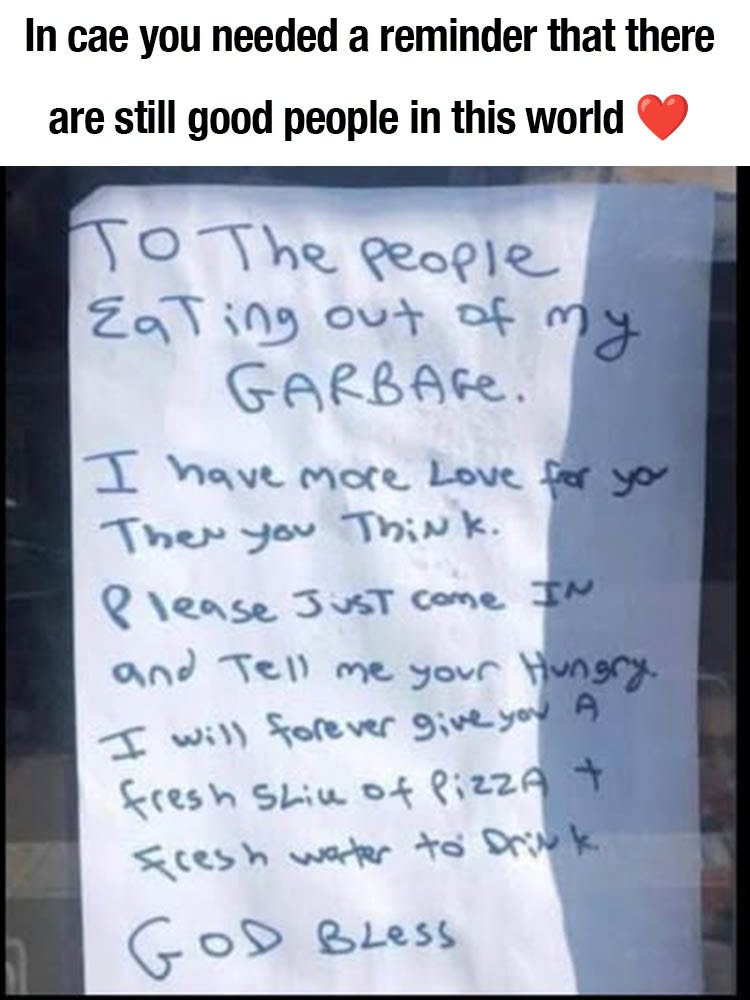
Late one evening, in a bustling neighborhood where neon signs flickered and the aroma of baked dough lingered in the air, a pizza shop owner stepped outside to take out the trash. What they saw could have been dismissed as routine urban hardship: a homeless man rummaging through the garbage, pulling out half‑eaten slices and crusts.
Most people would have shooed him away, perhaps with anger or disgust. But what happened next left witnesses stunned. Instead of chasing him off, the owner invited the man inside, offered him a fresh meal, and in doing so, reminded everyone that kindness can be more nourishing than food itself.
The Owner’s Perspective
Running a pizza shop is no easy task. Long hours, tight margins, and the constant pressure of keeping customers happy can harden even the most compassionate hearts. Yet, this owner carried something different — a belief that food is not just a product, but a bridge between people.
When confronted with the sight of someone eating from their trash, they didn’t see a nuisance. They saw hunger. They saw dignity being eroded by circumstance. And they chose to act.
The Homeless Man’s Struggle
For the man, life had become a series of survival tactics. Nights spent on cold sidewalks, days wandering in search of scraps, and the constant sting of invisibility. Society often looked past him, treating him as part of the city’s background noise.
That night, he expected rejection. He braced himself for harsh words. Instead, he was met with warmth — a gesture that pierced through years of neglect.
The Gesture That Stunned Everyone
The owner didn’t just hand him a slice. They invited him to sit at a table, poured him water, and served him a hot pizza — fresh out of the oven. Customers inside the shop watched silently, some moved to tears.
It wasn’t charity. It wasn’t pity. It was respect. The man was treated like any other customer, with the same courtesy and care.
Why Kindness Hits Harder Than We Expect
Psychologists explain that unexpected compassion can trigger profound emotional reactions. For someone accustomed to rejection, kindness feels almost surreal.
- He felt seen, no longer invisible.
- He felt valued, not for what he could pay, but for who he was.
- He felt human, reminded that dignity is not reserved for the privileged.
This is why witnesses described the moment as “stunning.” It wasn’t about pizza. It was about humanity.
The Ripple Effect in the Community
Word spread quickly. Locals shared the story on social media, praising the owner’s compassion. Some customers began donating meals to the homeless through the shop. Others volunteered to help shelters.
Kindness, like fire, spreads. One act can ignite dozens more. The homeless man may never know how many lives his presence touched that night, but the ripple effect was undeniable.
Acts of Kindness in Food Culture
This story is part of a larger tradition where food becomes a medium of compassion:
- Pay‑it‑forward cafes where customers buy meals for strangers.
- Community kitchens that serve free meals to those in need.
- Restaurant owners who quietly feed the hungry without seeking publicity.
Food is universal. It transcends class, race, and background. Sharing it is one of the simplest yet most profound ways to connect.
The Symbolism of Pizza
Pizza, often seen as comfort food, carries symbolism here. It’s communal — meant to be shared. It’s warm, filling, and familiar. By offering pizza, the owner wasn’t just feeding hunger; they were offering comfort, belonging, and a slice of normalcy.
Lessons for Society
This story offers several lessons:
- Empathy matters: Noticing someone’s pain can change their day.
- Small gestures count: Even minor acts can have major impact.
- Human connection: In a digital age, face‑to‑face compassion is irreplaceable.
- Breaking stereotypes: Homelessness is not a moral failing; it’s often a systemic issue.
Broader Social Commentary
The pizza shop owner’s kindness highlights a larger issue: the invisibility of the homeless. Cities often treat them as problems to be managed rather than people to be cared for. This story challenges that narrative.
It also raises questions about responsibility. Should compassion be left to individuals, or should society as a whole create systems where no one has to eat from garbage?
Witnesses Speak
Customers who saw the moment later described it as transformative. One said, “I came for dinner, but I left with perspective.” Another admitted they had walked past homeless people countless times without stopping, but after that night, they began carrying extra food to share.
The homeless man himself reportedly said, “It’s been years since someone treated me like a person.”
The Aftermath
The pizza shop became known not just for its food, but for its heart. Donations increased, and the owner began a weekly initiative to serve free meals to those in need. The homeless man, with regular access to food, began regaining strength and hope.
Conclusion: A Slice of Hope
In a world where indifference often overshadows compassion, the pizza shop owner’s choice stands out. They could have turned away. Instead, they opened their door — and in doing so, opened hearts.
The story reminds us that kindness doesn’t require wealth, status, or grand gestures. Sometimes, it’s as simple as offering a slice of pizza to someone who thought they were forgotten.