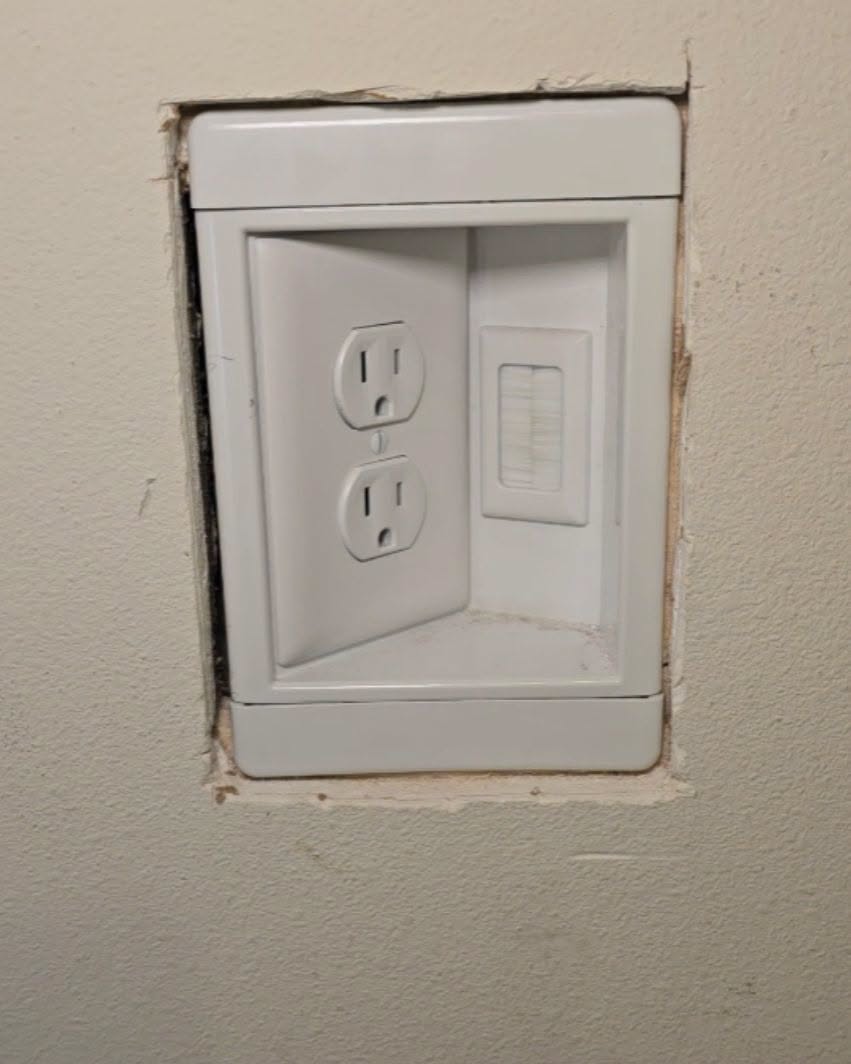
In the world of construction and electrical work, precision is everything. A recessed outlet may seem like a small detail, but when installed incorrectly, it becomes a glaring reminder of carelessness. Recently, I encountered one such installation in a business I frequent, and the sight of it has been gnawing at me ever since. The technician responsible refused to admit fault, insisting that the outlet was “meant to be” this way. The business owners, trusting the professional, accepted his explanation. But anyone with even a modest understanding of recessed outlets knows this wasn’t right.
The Anatomy of a Proper Recessed Outlet
A recessed outlet is designed to sit neatly within the wall, hiding the drywall cut and providing a flush, clean finish. The process is straightforward:
- Backers: Wooden supports placed perpendicularly between vertical studs. These provide stability and weight-bearing capacity.
- Studs: The vertical framing members that form the skeleton of the wall.
- Cutout: A precise opening made in the drywall, typically traced from the recessed box itself—not the cover plate.
- Securing: Once the backers are installed, the recessed box is mounted securely, ensuring it can hold the outlet and any connected devices without wobbling or gaps.
When done correctly, the outlet blends seamlessly into the wall, both functional and aesthetically pleasing.
Where It Went Wrong
My theory is simple: the technician had never installed one of these before. Instead of tracing the recessed box, they traced the cover plate. That mistake led to a hole that was too large. Faced with the error, they likely realized fixing it would require extra effort—replacing drywall, repositioning backers, and re-cutting the opening. Rather than correcting the mistake, they chose the path of least resistance: leave it as is and hope no one notices.
But people do notice. Every time I walk into that business, my eyes are drawn to the botched outlet. It’s not just an eyesore; it’s a symbol of indifference. The technician’s refusal to admit fault only compounds the frustration. Honesty and accountability are cornerstones of good craftsmanship, and both were absent here.
Why This Matters
Some might argue that a recessed outlet is a minor detail, not worth the fuss. But small details add up. In professional spaces, aesthetics matter. A poorly installed outlet undermines the overall impression of quality. More importantly, improper installation can compromise safety. Loose fittings, exposed gaps, or unstable backers can lead to electrical hazards over time.
This isn’t just about drywall and studs—it’s about professionalism. When technicians cut corners, they erode trust. Businesses rely on tradespeople to deliver work that is both functional and durable. Customers, in turn, expect environments that reflect care and attention to detail. A sloppy outlet betrays both.
Taking Matters Into My Own Hands
Rather than waste time arguing, I plan to correct the problem myself. The fix is straightforward:
- Remove the existing outlet and cover plate.
- Cut a properly sized opening using the recessed box as the template.
- Install new backers securely between the studs.
- Mount the recessed box flush with the wall.
- Reattach the outlet and cover plate, ensuring a clean finish.
It’s a simple job, but one that requires patience and precision—qualities the original technician neglected. By doing it right, I’ll not only restore functionality but also restore dignity to the space.
The Larger Lesson
This experience highlights a broader issue in skilled trades: the temptation to rush. Whether due to deadlines, lack of experience, or sheer indifference, shortcuts are taken. But shortcuts rarely save time in the long run. They create problems that someone else must fix, often at greater expense and frustration.
Craftsmanship is about pride in one’s work. It’s about leaving behind something that speaks to skill, care, and integrity. A recessed outlet may be small, but it’s a test of those values. And when those values are absent, the flaws become impossible to ignore.
Conclusion
Every time I see that recessed outlet, I’m reminded of the technician’s failure—not just in execution, but in honesty. Refusing to admit mistakes is worse than making them. Mistakes can be fixed; denial cannot. By correcting the outlet myself, I’ll reclaim a small victory against indifference. And maybe, just maybe, I’ll inspire others to demand better from the professionals they trust.
Because in the end, it’s not just about outlets. It’s about respect—for the craft, for the space, and for the people who live and work within it.